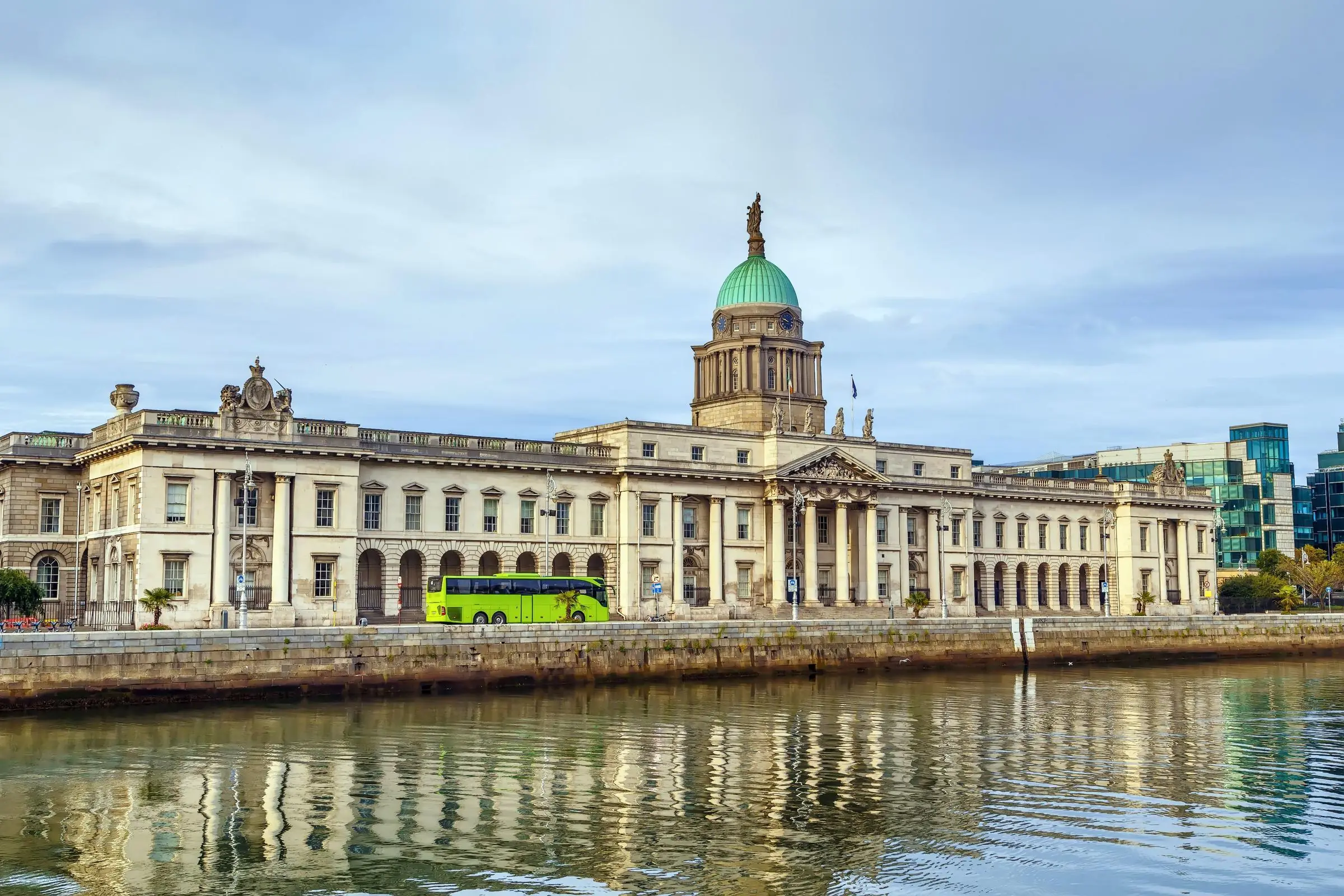
Sitting proudly on the north bank of the River Liffey, the Custom House is arguably Dublin’s most striking neoclassical building. While thousands of commuters pass its long, colonnaded facade every day, far fewer step inside the Custom House Visitor Centre.
Designed by the English architect James Gandon and completed in 1791, the building was originally the headquarters for the Commissioners of Custom and Excise. But its history is far more turbulent than its elegant exterior suggests. In 1921, during the Irish War of Independence, the building was deliberately set ablaze by the Irish Republican Army (IRA) in an event that destroyed centuries of local government records and left the structure a hollowed-out shell.
Today, after decades of meticulous restoration by the Office of Public Works (OPW), the building functions as a working government office, but its dedicated Visitor Centre allows the public to explore its architectural brilliance and dramatic past. Here is exactly how to plan your visit, what to look for on the facade, and how to navigate the surrounding Docklands.
Why the Custom House Matters: The 1921 Fire
To understand the Custom House, you have to understand the fire. By 1921, the building was the administrative heart of British rule in Ireland regarding local government and taxation. On May 25, 1921, over 100 members of the IRA’s Dublin Brigade seized the building in broad daylight.
Their objective was to cripple the British administration by destroying its tax and local government records. They ordered the staff out, poured paraffin over the files, and set the building alight. The fire burned for five days. The heat was so intense that the copper dome melted, and the interior stonework calcified and collapsed.
The Loss of History: While the IRA achieved their tactical goal of paralyzing the local government, the fire also destroyed irreplaceable historical documents, including centuries of wills, parish registers, and census returns, creating a permanent gap in Irish genealogical records.
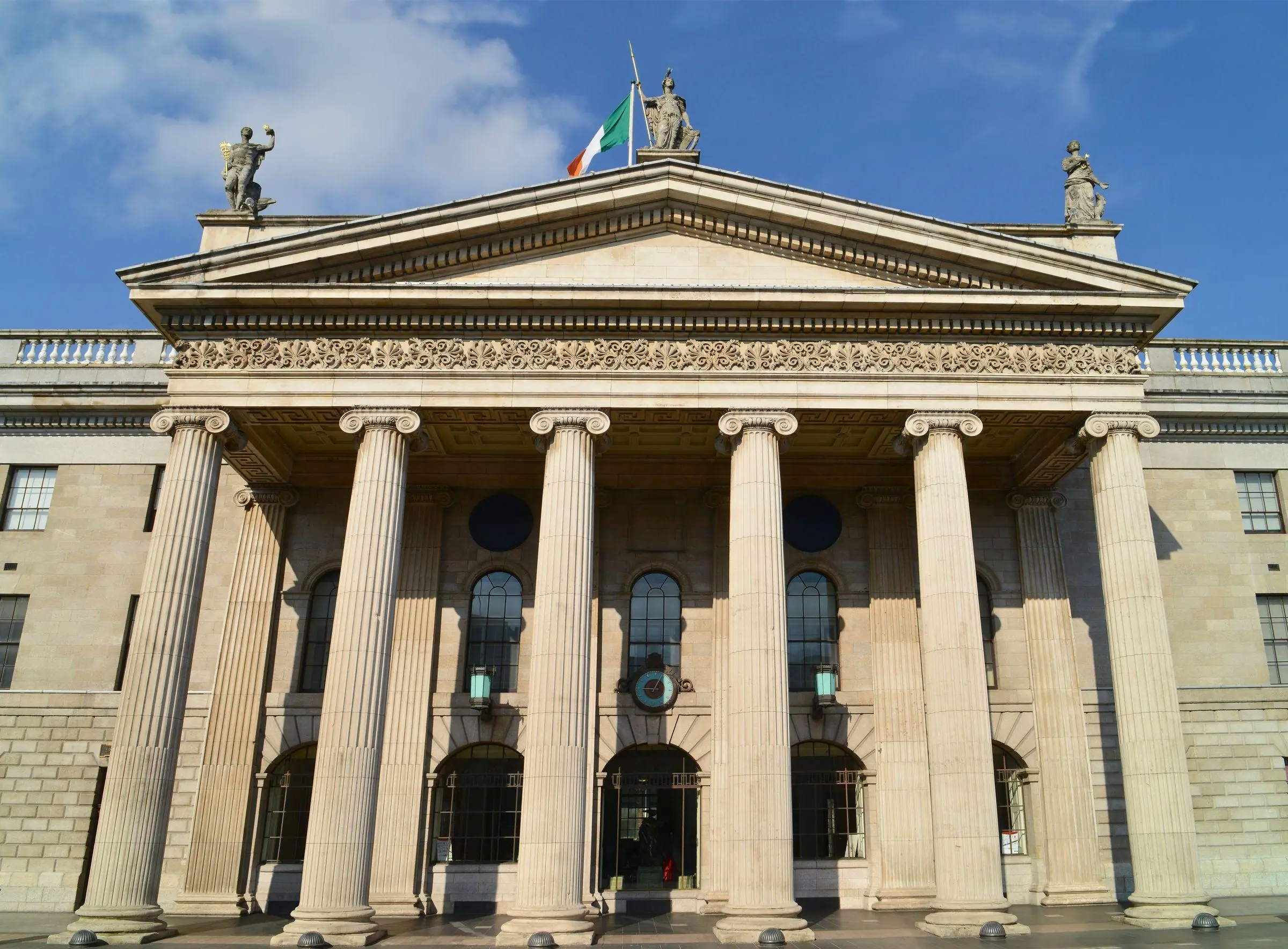
The Visitor Centre exhibition does an excellent job of detailing this event, displaying melted artifacts, historical photographs of the blaze, and accounts of the firefight that broke out on the streets outside between the IRA and British forces. If you are interested in this era of Irish history, you should also plan to visit the General Post Office, which was the headquarters of the 1916 Easter Rising just a few blocks away.
5 Architectural & Cultural Highlights
James Gandon’s design is a masterclass in Palladian and neoclassical architecture. Even if you only have time to walk around the exterior, there are specific details you should look for.
1. The Riverine Heads
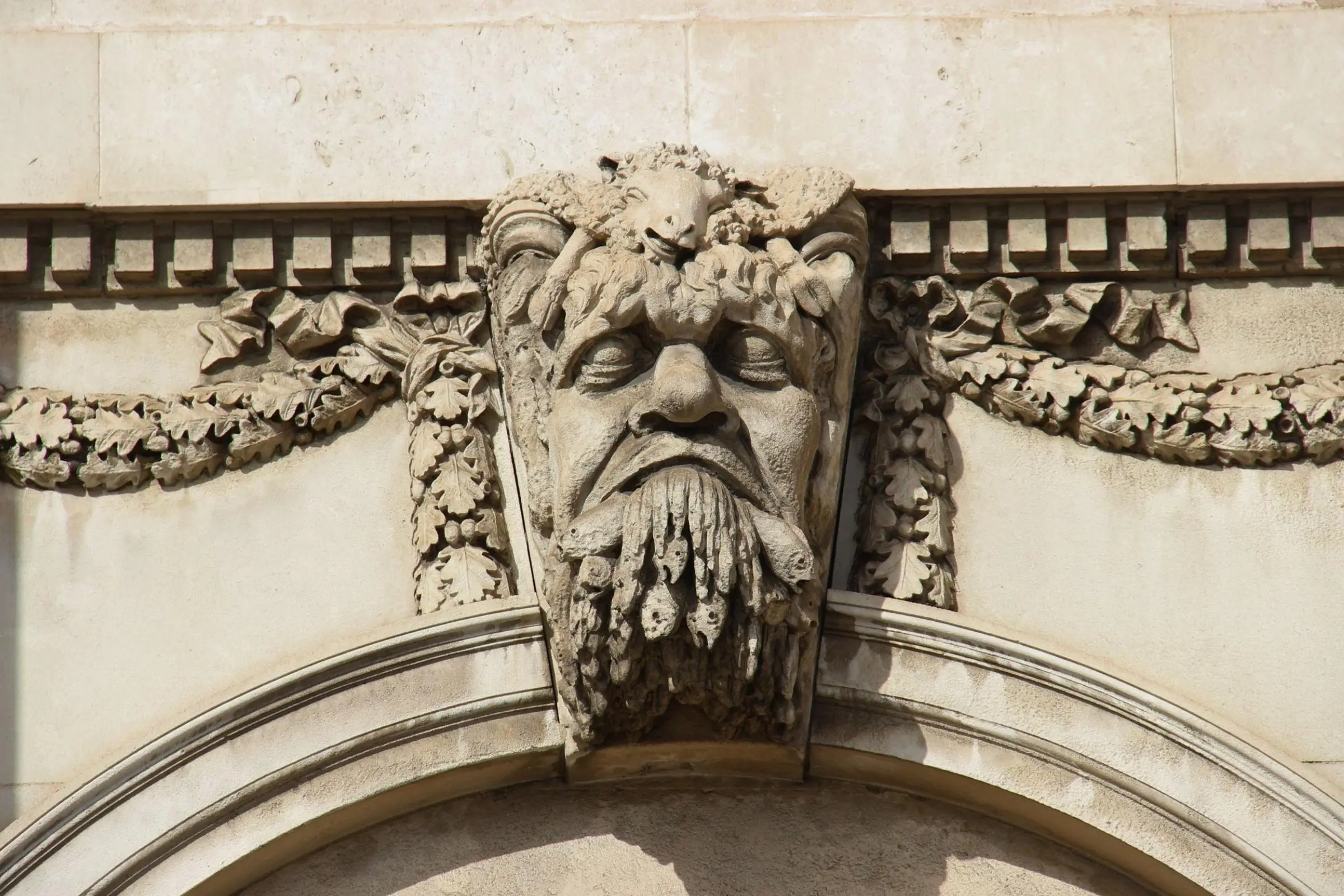
Carved by Irish sculptor Edward Smyth, the keystones above the entrances and windows feature 14 distinct stone heads. Thirteen of these represent the major rivers of Ireland (including the Liffey, the Shannon, and the Boyne), while the fourteenth represents the Atlantic Ocean. Smyth gave each river a unique personality and adorned them with elements representing their region—for example, the River Bann head is draped with linen, while the Liffey is crowned with the fruits of the city.
2. The Copper Dome and the Figure of Commerce
The building’s central focal point is its verdigris copper dome, which was completely rebuilt after the 1921 fire using Ardbraccan limestone. At the very top stands a 16-foot statue of Commerce, leaning on an anchor. During the restoration, architects had to rely on old photographs and original sketches to recreate the dome’s exact proportions.
3. The South Portico
Facing the River Liffey, the main entrance is marked by a grand portico supported by four Doric columns. In the pediment above the columns, you will see a high-relief sculpture depicting the friendly union of Britannia and Hibernia (Ireland), arriving in a chariot pulled by seahorses. It’s a piece of political art that reflects the building’s origins under British rule.
4. The Visitor Centre Exhibition
Located inside, the exhibition space is divided into sections covering the building’s construction, the 1921 fire, and the subsequent restoration phases. The highlight here is the collection of salvaged architectural fragments and the detailed timeline of how the OPW managed to rebuild the dome and interior using traditional 18th-century masonry techniques.
5. The Clock Tower Mechanism
While you cannot climb into the clock tower itself, the Visitor Centre provides detailed insights into the original clock mechanism, which was destroyed in the fire, and its modern replacement. The clock faces look out over the river, keeping time for the bustling Docklands neighborhood.
Ticket Options: Independent vs. Guided
Because the Custom House is managed by the Office of Public Works (Heritage Ireland), entry is highly affordable, and sometimes even free on the first Wednesday of the month. You can choose to walk through the exhibition independently or join an OPW guided tour.
How to Visit the Custom House
- Self-Guided: Costs just a few euros. You can move at your own pace and read the exhibition panels in about 30–45 minutes.
- OPW Guided Tour: Usually included in the entry price (subject to staff availability). The guides are incredibly knowledgeable about the 1921 fire and the architectural restoration.
- Self-Guided: You miss out on the nuanced storytelling and small architectural details the guides point out.
- OPW Guided Tour: Times are fixed and can be canceled if the building is needed for government functions.
The Custom House is a working government building (housing the Department of Housing, Local Government and Heritage). While the Visitor Centre has dedicated hours, it can occasionally close for state events. Always check the official Heritage Ireland website before your visit.
If you are planning to see multiple historical sites in the area, consider picking up a Dublin Pass, which includes entry to several nearby attractions, or booking a comprehensive City Sightseeing Hop-On Hop-Off Bus Tour which stops right by the Custom House.
Audience Segmentation: How to Plan Your Visit
Depending on your travel style, here is how to best incorporate the Custom House into your Dublin itinerary.
For the Time-Poor
If you only have a weekend in Dublin, you don’t necessarily need to go inside. The best way to appreciate the Custom House is from the outside. Walk across the Sean O’Casey Bridge or the Talbot Memorial Bridge for the best photo angles of the facade reflecting on the water. It takes about 15 minutes to walk the perimeter and admire the Riverine Heads.
For Budget Travelers
The Custom House Visitor Centre is one of the cheapest indoor attractions in Dublin. Entry is typically under €5. It is an excellent, low-cost way to spend an hour learning about Irish history without paying the premium prices of the larger private museums.
For Families
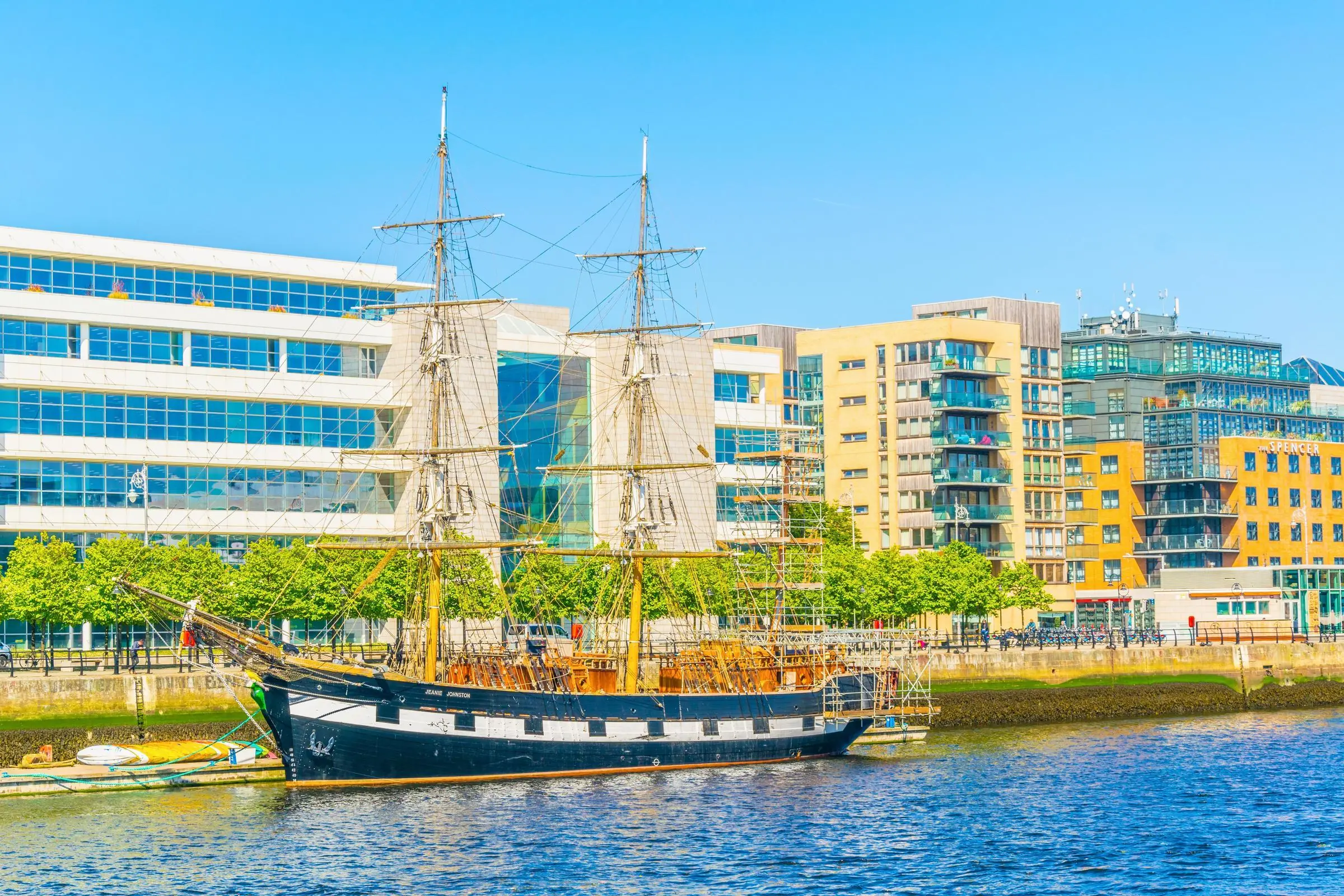
The exhibition inside is quite text-heavy and focused on architecture and political history, which may not hold the attention of younger children for long. If you are traveling with kids, pair a quick look at the Custom House with a visit to the Jeanie Johnston Tall Ship, which is moored literally steps away on Custom House Quay. The ship offers a much more tactile, immersive experience about the Irish famine.
Logistics & Transit Directions
The Custom House is located on Custom House Quay, Dublin 1, right on the north bank of the River Liffey. It is incredibly easy to reach via public transit.
- By Luas (Tram): Take the Luas Red Line. The Busáras stop is directly behind the Custom House (a 2-minute walk). Alternatively, the George’s Dock stop is just to the east.
- By DART (Commuter Train): Get off at Tara Street Station on the south side of the river. Walk out of the station, cross the Butt Bridge or Talbot Memorial Bridge, and you are right at the Custom House. It takes about 4 minutes.
- By Bus: Numerous city buses terminate at or pass by Busáras (the central bus station) right behind the building. The Big Bus Hop-On, Hop-Off Tour also has a designated stop nearby.
A Morning in the Docklands
⏱️ Total: 2 h 30 minThe Custom House Visitor Centre
Start your morning exploring the exhibition and learning about the 1921 fire.
The Jeanie Johnston Tall Ship
Walk 2 minutes east along the quay to board the Jeanie Johnston and learn about the famine emigrants.
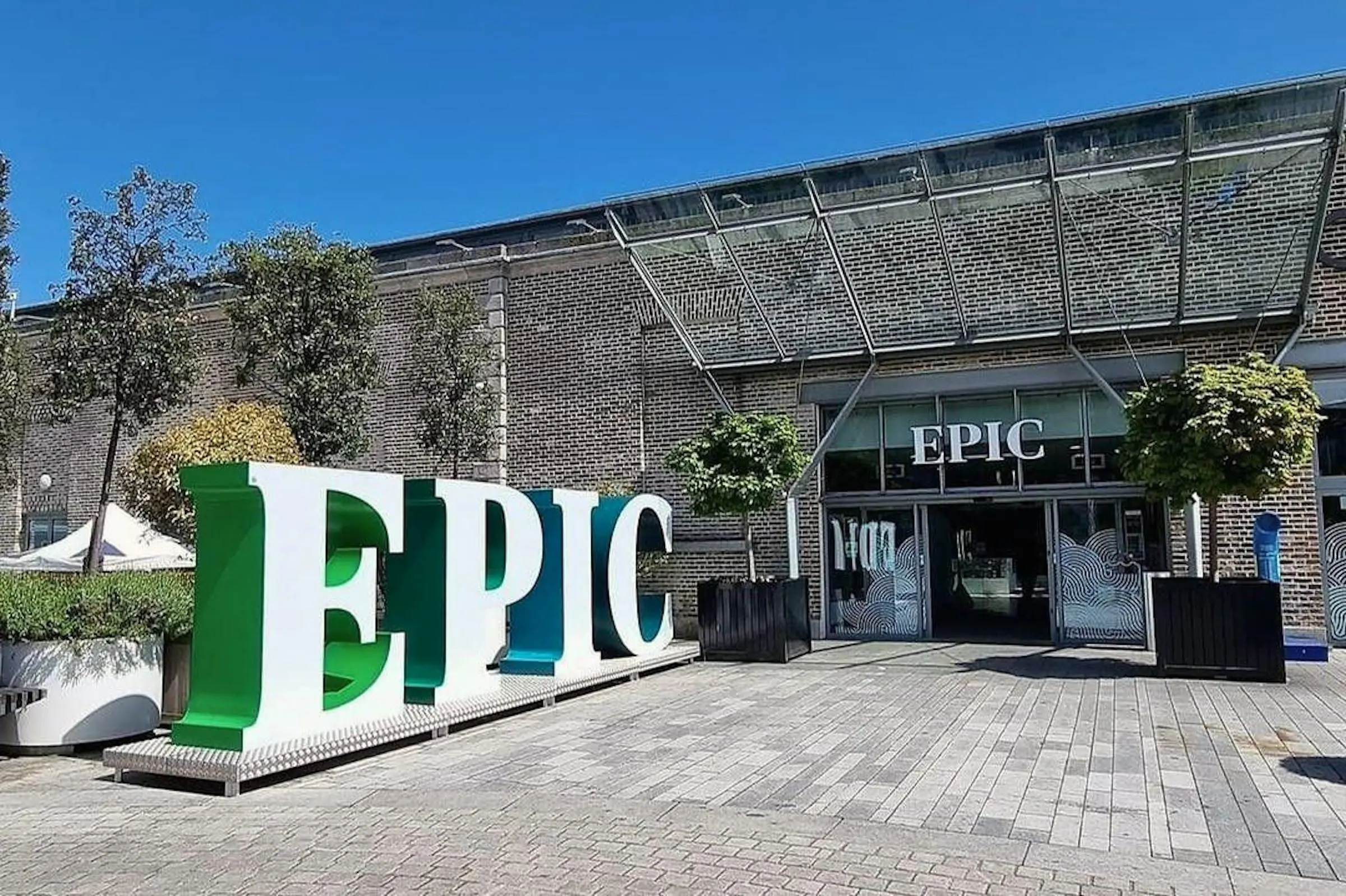
EPIC The Irish Emigration Museum
Continue another 3 minutes east to the CHQ Building to visit the interactive EPIC Museum.
Local Tips for Avoiding Crowds
- When to Go: The Custom House Visitor Centre rarely gets the overwhelming crowds seen at the Guinness Storehouse or Trinity College. However, it can get busy with school groups on weekday mornings. Visit after 2:00 PM for the quietest experience.
- Photography: The building faces south. For the best lighting on the main facade, photograph it in the late morning or early afternoon. For dramatic silhouette shots, shoot from the south bank of the Liffey at sunset.
- Combine with the CHQ Building: After your visit, walk east along the river to the CHQ Building. It houses the EPIC Museum and several excellent cafes and food stalls where you can grab lunch away from the busier Temple Bar area.
Where to Stay Nearby
The area around the Custom House (the IFSC and Docklands) is a fantastic place to base yourself. It is slightly removed from the noisy nightlife of Temple Bar but remains within a 10-minute walk of O’Connell Street and Trinity College. It is particularly convenient if you are taking day tours that depart from the city center, or if you need quick access to the airport via the Aircoach or Dublin Express buses that stop nearby.
Frequently Asked Questions
Is the Custom House Visitor Centre free to enter?
Entry is not always free, but it is very inexpensive (usually around €5 for adults). However, it is free on the first Wednesday of every month as part of the OPW’s Free Wednesday initiative.
How long does it take to visit the Custom House?
If you are doing a self-guided walk through the exhibition, expect to spend about 30 to 45 minutes. If you join an OPW guided tour, allocate about an hour.
Can you go up into the dome of the Custom House?
No, the dome and the clock tower are not open to the public. The Visitor Centre exhibition is located on the ground floor, and the rest of the building is used for active government offices.
Is the Custom House wheelchair accessible?
Yes, the Visitor Centre is fully wheelchair accessible, with ramp access and an elevator for any slight level changes within the exhibition area.
What is the difference between the Custom House and Dublin Castle?
The Custom House was built as a tax and administrative headquarters in the late 18th century, while Dublin Castle has medieval origins and served as the seat of British rule in Ireland for over 700 years. Both are OPW sites and both are worth visiting for different eras of Irish history.
Are there public toilets available at the Visitor Centre?
Yes, there are clean, public restroom facilities available for ticket holders inside the Visitor Centre.
Keep Planning: For more information on exploring this side of the city, check out our guide to the Docklands Neighborhood or see our breakdown of the best walking tours to learn more about Dublin’s revolutionary history.