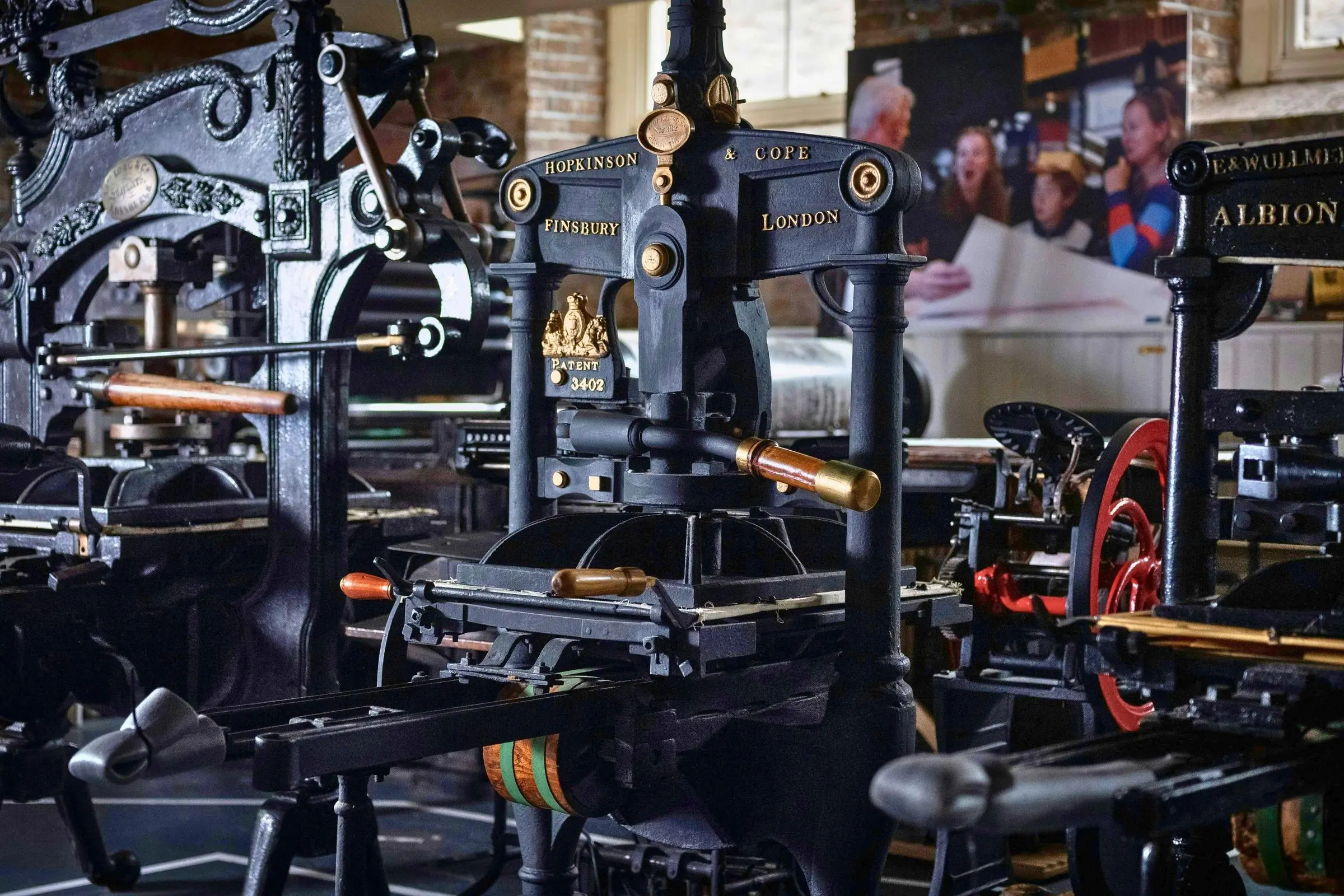
Tucked away in a former military garrison in Dublin’s Ballsbridge neighborhood, the National Print Museum is a specialized institution dedicated to the history, craft, and mechanics of printing. Unlike traditional museums where artifacts sit quietly behind glass, this is a working museum. The air often smells faintly of ink and machine oil, and many of the cast-iron presses on display are still fully operational.
For most visitors, the main draw is the museum’s connection to the 1916 Easter Rising. It was on a Wharfedale stop-cylinder press—identical to the one housed here—that the Proclamation of the Irish Republic was secretly printed under the cover of darkness.
If you have an interest in typography, industrial history, or the mechanics of how information was disseminated before the digital age, this museum warrants an hour of your time. Here is exactly how to plan your visit, what to look out for, and why you should opt for the guided tour.
Is the National Print Museum Right for You?
Because this is a niche museum, it appeals to different travelers in different ways. Here is how to approach it based on your travel style:
- For the Time-Poor: The museum is small. You can easily walk the floor and see the main exhibits in 30 to 45 minutes. It pairs well with a walk down the Grand Canal or a visit to nearby Merrion Square.
- For Budget Travelers: General admission to walk around the museum independently is actually free. However, the guided tour costs just €6, making it one of the cheapest guided historical experiences in Dublin.
- For Families: Older children who like mechanics, engineering, or history will find the massive machines interesting. However, toddlers and very young children might get bored quickly, as the exhibits are largely static unless a guide is actively demonstrating them. There are some interactive stamping and printing stations, but it is not a playground.
5 Architectural and Cultural Highlights
The museum’s collection spans the evolution of printing from the hand-operated presses of the 1800s to the hot-metal typesetting machines of the 20th century. Here are five specific things to look out for.
1. The Wharfedale Stop-Cylinder Press
This is the centerpiece of the museum’s historical narrative. While the exact press used to print the 1916 Proclamation of the Irish Republic was destroyed, the museum houses an identical Wharfedale stop-cylinder press from the same era.
The story of the Proclamation’s printing is a masterclass in improvisation. The printers, Christopher Brady, Michael Molloy, and Liam O’Brien, had to sneak into Liberty Hall. They were severely short on type (the individual metal letters), meaning they had to print the document in two halves. If you look closely at a replica of the Proclamation, you can see the mismatched fonts and the slightly lighter ink on the bottom half.
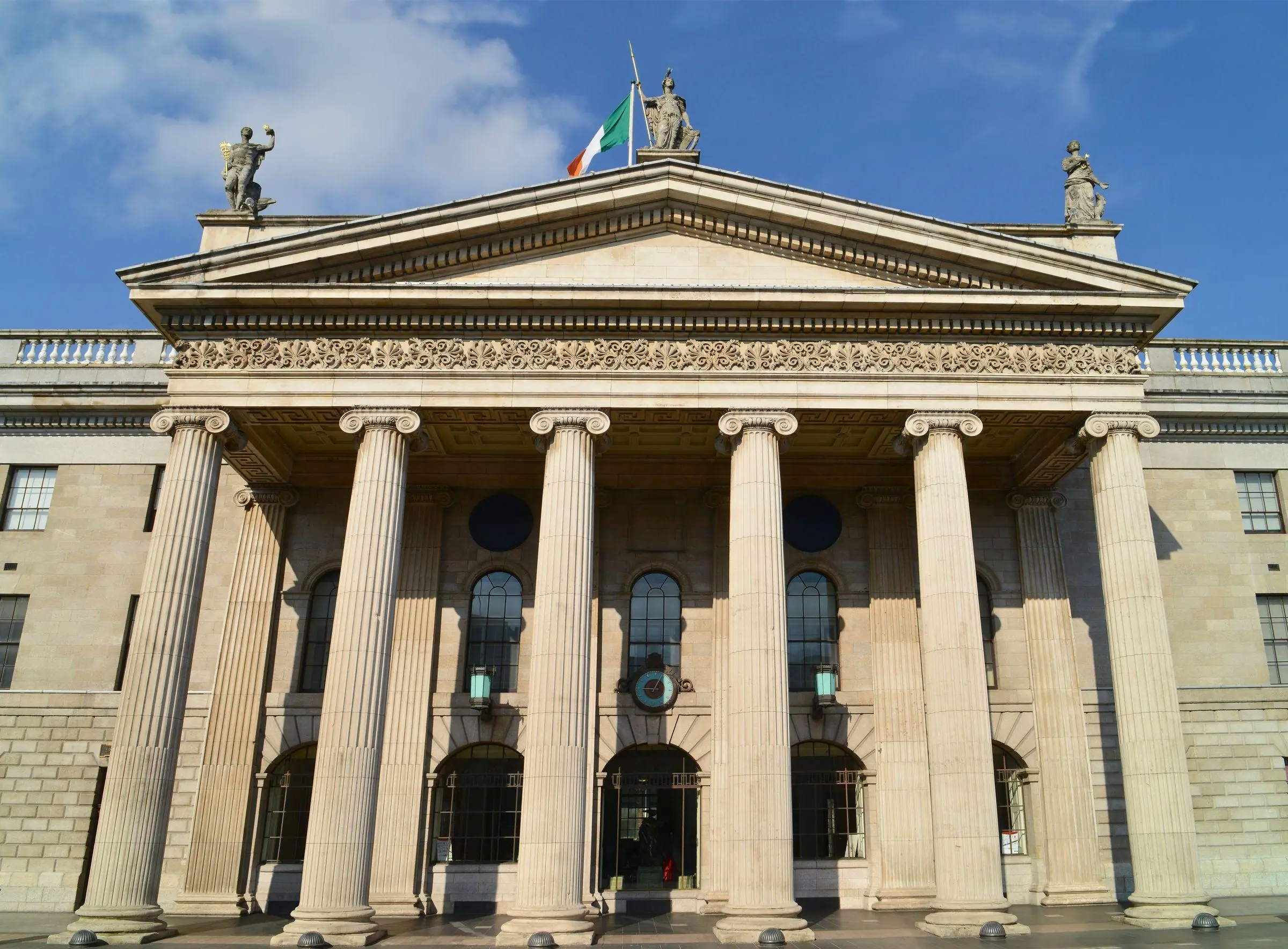
Keep Planning: To understand the full context of the Easter Rising, pair this visit with a trip to the General Post Office (GPO) Museum.
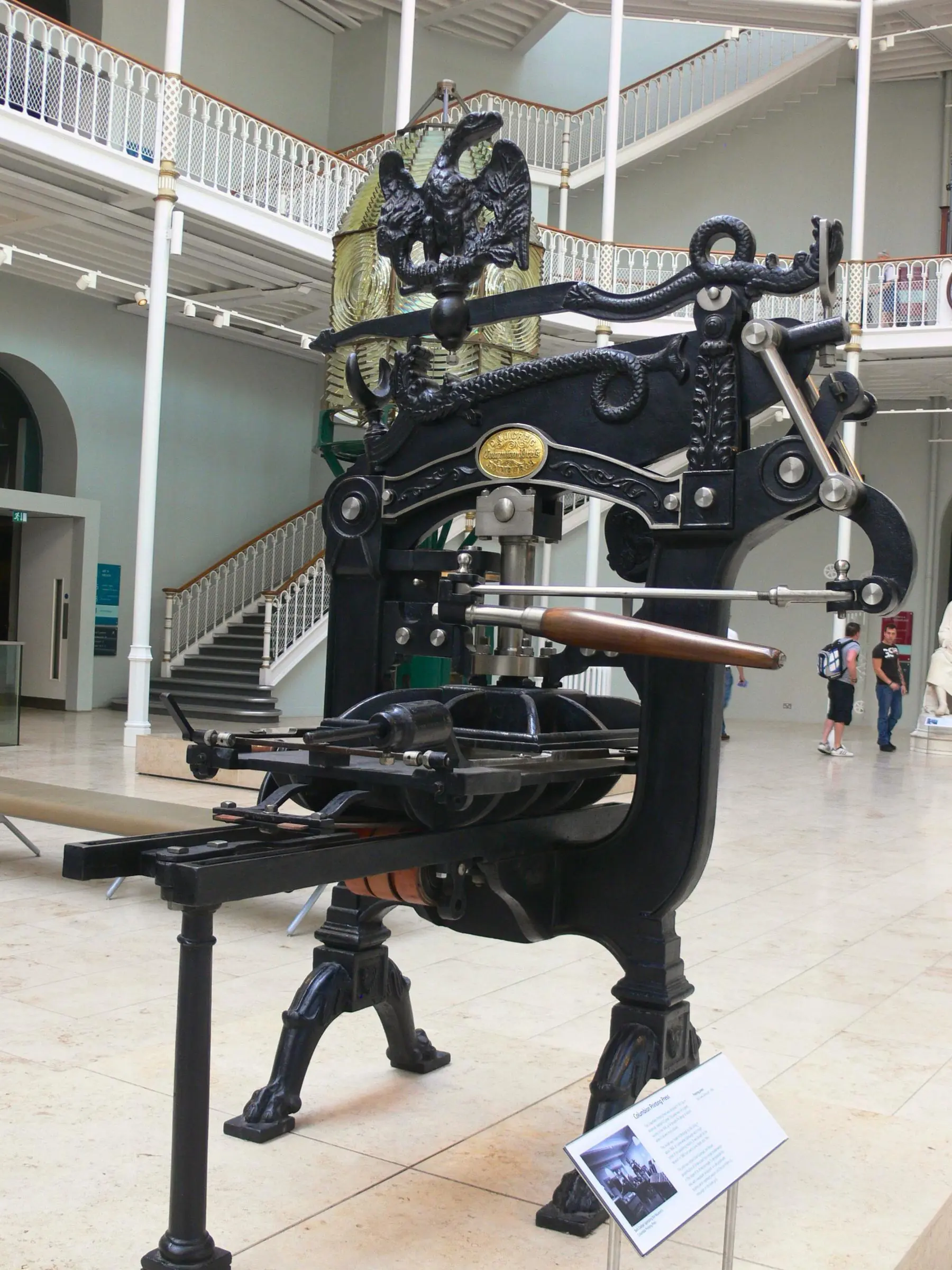
2. The Columbian Press
Invented in 1813 by George Clymer, the Columbian Press is impossible to miss. It is a massive, ornate cast-iron hand press topped with a heavy counterweight shaped like a bald eagle. The eagle isn’t just decorative; it functions as a counterweight that helps lift the heavy iron platen off the paper after the printer pulls the lever. It is a prime example of Victorian-era industrial design, where heavy machinery was often highly decorated.
3. The Linotype Machine
Thomas Edison reportedly called the Linotype machine the “eighth wonder of the world.” Before its invention in the 1880s, every single newspaper article had to be set by hand, letter by letter. The Linotype allowed an operator to type on a 90-character keyboard. The machine would then assemble molds of the letters and cast an entire solid line of type using molten lead (hence the name “line-o’-type”).
Standing in front of it, you can appreciate the sheer mechanical complexity of the pulleys, belts, and matrices. During a guided tour, the guide will often explain the dangerous reality of working with pots of molten lead in poorly ventilated rooms.
4. The Composing Area
Before mechanization, typesetters (or compositors) stood at slanted wooden desks called “cases,” picking out individual lead letters to form words. The museum has a fully intact composing area.
This is where many common English idioms originated. The capital letters were kept in the upper box, and the small letters in the lower box—giving us the terms “uppercase” and “lowercase.” Because the letters ‘p’ and ‘q’ look identical when cast in reverse on a lead block, apprentices were frequently warned to “mind your p’s and q’s.”
5. Beggars Bush Barracks
The building that houses the museum is a highlight in itself. Beggars Bush Barracks was built in 1827 as a training depot for the British Army. In 1922, it became the first barracks handed over to the Irish Free State Army following the Anglo-Irish Treaty. The museum is located in the former Garrison Chapel. The high ceilings and tall windows, originally designed to let in natural light for church services, now provide excellent lighting for viewing the intricate details of the printing presses.
Ticket Options: Independent vs. Guided
You have two main ways to experience the National Print Museum.
General Admission
- Free entry to the main exhibition floor
- Read the informational placards at your own pace
- Good for a quick 20-minute walkthrough
- No live demonstrations of the machinery
Entry Ticket + Guided Tour
- 45-minute tour led by a knowledgeable guide
- Live demonstrations of the printing presses
- Detailed history of the 1916 Proclamation printing
- Highly recommended to actually understand the machines
Our Verdict on Tickets
- The guided tour is exceptionally cheap (€6).
- The machines are static blocks of iron without a guide to explain how they move and operate.
- Guides often share niche historical anecdotes about Dublin’s printing unions.
- Tours run at specific times, requiring you to plan your arrival.
- If you are in a rush, the 45-minute tour might take too long.
Tour Availability: Guided tours do not run continuously. They are typically scheduled for specific times (e.g., 11:30 AM and 2:30 PM, though this varies by season). It is highly advisable to book your guided tour ticket in advance to secure a spot.
Logistics: Getting There and Getting Around
The National Print Museum is located at Beggars Bush Barracks, Haddington Road, Dublin 4. It is situated in a quiet, leafy residential and commercial neighborhood, slightly outside the immediate city center but very accessible.
Transit Directions
- By DART (Train): The easiest way to get here is via the DART. Get off at Grand Canal Dock station. From the station, it is a flat, 5-minute walk down Barrow Street and across to Haddington Road.
- By Bus: Several Dublin Bus routes serve the area. Routes 4, 7, 7a, and 39a stop on Northumberland Road, which is a 5-minute walk from the museum gates.
- Walking: If you are exploring the Georgian quarter, the museum is about a 15 to 20-minute walk from Merrion Square or Trinity College.
Accessibility
The museum is located on the ground floor and is fully wheelchair accessible. There are accessible restrooms on-site. Because the machines are spaced out on the factory floor, there is generally enough room to navigate between the exhibits.
Local Tips & Insider Knowledge
1. Eat at the Press Café You don’t have to leave the building for a good meal. The Press Café, located right next to the museum entrance within the barracks, is excellent. It is popular with locals working in the nearby tech offices (Google’s European headquarters is just down the street). They serve great coffee, hearty soups, and excellent brunch options. It gets very busy between 12:30 PM and 1:30 PM on weekdays, so plan to eat before or after the lunch rush.
2. Combine with the Docklands Since you are already in Dublin 4, use this opportunity to explore the nearby Grand Canal Dock area. This is the modern face of Dublin, often called “Silicon Docks.” You can grab a coffee, look at the modern architecture, or walk along the canal. It provides a sharp, interesting contrast to the 19th-century industrial machinery you just viewed.
3. Look for the Workshops The museum frequently hosts weekend workshops on traditional crafts like letterpress printing, bookbinding, and calligraphy. If you are a creative traveler looking for a hands-on souvenir, check their official schedule in advance. These workshops sell out weeks ahead of time.
4. Avoiding Crowds Because it is a niche museum, it rarely suffers from the massive crowds seen at the Guinness Storehouse or the Book of Kells. However, they do host school groups on weekday mornings. Visiting after 2:00 PM usually guarantees a quiet experience.
Where to Stay Nearby
The area around the museum (Ballsbridge and Grand Canal Dock) is one of Dublin’s most affluent and safe neighborhoods. It is an excellent base if you prefer to be slightly removed from the noisy nightlife of Temple Bar, while still being within walking distance of the city center.
Frequently Asked Questions
How much time do I need at the National Print Museum?
If you are walking through independently, 30 minutes is enough. If you take the guided tour (which we recommend), plan for about 45 to 60 minutes. Add another 45 minutes if you plan to eat at the on-site Press Café.
Is the National Print Museum included in the Dublin Pass?
General admission to the museum is free for everyone. The guided tour is a separate cost and is generally not covered by standard city passes like the Dublin Pass. You will need to purchase the €6 guided tour ticket separately.
Can I actually print something during my visit?
During the guided tour, the guide will often operate one of the smaller presses and may allow visitors to pull the lever to print a keepsake (like a bookmark or a small poster). There are also basic stamping stations for children. However, you cannot operate the large historical presses yourself.
Is the museum air-conditioned?
No. The museum is housed in a historic 19th-century barracks building. It stays relatively cool in the summer due to the thick stone walls, but it can be a bit drafty in the winter. Bring a light layer if you are visiting between November and March.
Is there parking available at the museum?
There is no dedicated visitor parking inside the Beggars Bush Barracks courtyard. You will need to rely on on-street pay-and-display parking on Haddington Road or the surrounding residential streets, which can be difficult to find on weekdays. Taking the DART to Grand Canal Dock is highly recommended instead.
Does the museum have the original 1916 Proclamation?
The museum holds an original copy of the 1916 Proclamation, which is sometimes on display (though it is occasionally rested for preservation purposes). They also have a detailed replica and the exact type of machine used to print the original document.
For further reading on Ireland’s industrial and cultural heritage, you can check the Heritage Ireland website or explore our guide to the nearby EPIC The Irish Emigration Museum.