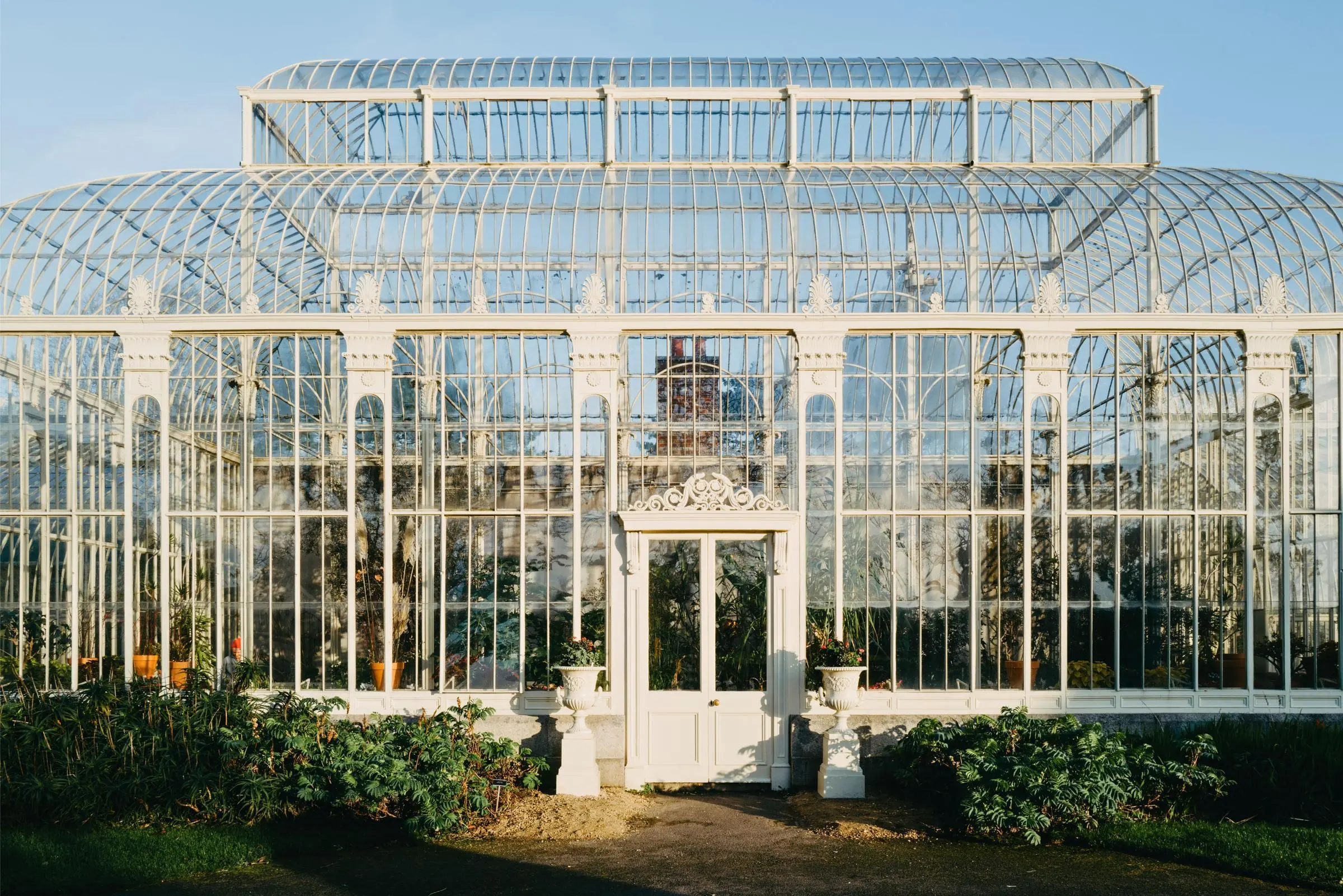
Located just three kilometers north of Dublin’s city center in the suburb of Glasnevin, the National Botanic Gardens offer a quiet retreat from the busy streets. Founded in 1795 by the Dublin Society, this 19.5-hectare estate sits on the south bank of the Tolka River and is home to over 15,000 plant species.
While many visitors come simply to walk the manicured lawns, the gardens are a working scientific institution and a showcase of Victorian engineering. Because entry is completely free, it is one of the most popular things to do in Dublin, especially on sunny weekends. This guide breaks down exactly how to navigate the gardens, which glasshouses to prioritize, and how to combine your visit with the historic Glasnevin Cemetery right next door.
Practical Info: The gardens are open year-round, but winter hours are shorter. Entry is free, and you do not need to book in advance to walk the grounds. However, dogs (other than guide dogs) are not permitted, and picnics are restricted to designated areas near the entrance.
Historical Significance
The gardens were originally established to promote a scientific approach to agriculture. In the late 18th century, the focus was on identifying plants that could be useful for food, medicine, and dyeing fabrics. By the 1830s, under the direction of botanist David Moore, the gardens shifted toward the study of global botany, collecting rare and exotic species from around the world.
The most defining era for the gardens came in the mid-19th century with the construction of its wrought-iron glasshouses. Designed by the pioneering Irish iron-founder Richard Turner, these structures allowed the gardens to cultivate tropical plants that could never survive an Irish winter. Today, the gardens remain a hub for botanical research and conservation, managed by the Office of Public Works (OPW).
5 Architectural and Cultural Highlights
If you only have an hour or two, focus your time on these specific areas of the estate.
1. The Curvilinear Range
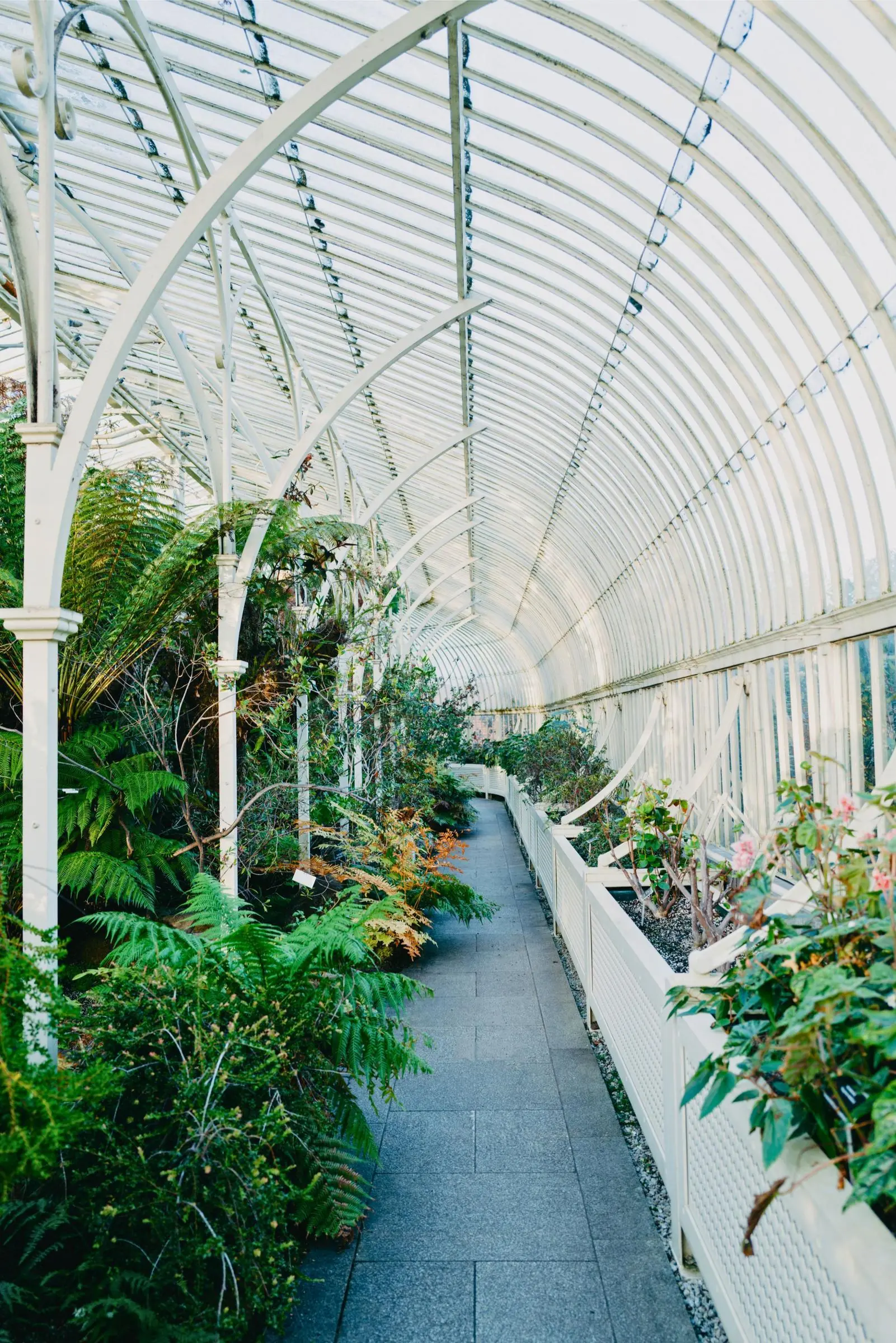
This is the architectural crown jewel of the gardens. Completed in 1848 by Richard Turner (who also built the Palm House at Kew Gardens in London), the Curvilinear Range is a masterpiece of wrought iron and glass. The structure was meticulously restored in the 1990s. Inside, it houses plants from the Southern Hemisphere, including Australia, South Africa, and South America. It gets very warm inside, so dress in layers.
2. The Great Palm House
Built in 1884 to replace an earlier wooden structure that was destroyed by a storm, the Great Palm House stands 65 feet tall. It was designed to accommodate the massive growth of tropical palms and cycads. The humid, dense atmosphere inside feels worlds away from the crisp Dublin air outside. Look out for the cycad collection, some of which date back to the 19th century.
3. The Alpine Yard
Tucked behind the glasshouses, the Alpine Yard is a specialized area designed to mimic the harsh, rocky environments of high-altitude regions. The plants here are small, delicate, and highly specialized. The OPW gardeners use specific soil mixes and cold frames to keep these mountain plants thriving at sea level.
4. The Rose Garden
Located near the center of the estate, the circular Rose Garden is at its peak between June and August. It features hundreds of varieties, from historic heritage roses to modern hybrids, arranged by color and fragrance. It is a highly structured, formal contrast to the wilder arboretum areas near the river.
5. The Glasnevin Cemetery Gate
While not a plant, the physical gate connecting the Botanic Gardens to Glasnevin Cemetery is a major cultural highlight. Opened in recent years to allow visitors to easily pass between the two historic sites, it creates a seamless two-part itinerary. You can walk from the vibrant life of the gardens straight into the monumental history of Ireland’s most important necropolis.
Since the gardens and the cemetery share a wall and a connecting gate, it makes sense to do both in one trip. While the gardens are free, the cemetery’s guided history tours frequently sell out.
Tickets and Tours: Independent vs. Guided
Entry to the National Botanic Gardens is entirely free, making it a staple of our budget guide to Dublin. You can walk in off the street and explore at your own pace. However, the OPW does offer official guided tours.
How to Visit: DIY vs. Guided
- Self-Guided (Free): Complete flexibility. Great for families with restless kids or photographers who want to wait for the right light in the glasshouses.
- OPW Guided Tour (€5): Usually runs on Sundays (and some weekdays in summer). Excellent for gardening enthusiasts who want to learn about specific plant conservation efforts and the history of Richard Turner’s ironwork.
- Self-Guided: You miss the nuanced history of the plant collections and the architectural challenges of restoring the glasshouses.
- OPW Guided Tour: Times are limited and subject to volunteer availability. You must book at the visitor center on the day.
If you are using a multi-attraction pass like the Dublin Pass, note that the Botanic Gardens are not included because they are already free. However, the hop-on hop-off buses included in many passes do stop relatively close by.
Advice for Different Traveler Types
For Families: The gardens are highly stroller-friendly, with wide, flat, paved paths throughout the main sections. Kids usually love the sensory experience of the hot, humid Palm House and spotting the resident grey squirrels on the lawns. There is a cafe near the entrance with standard sandwiches and cakes, and clean public restrooms with changing facilities. See our guide to visiting Dublin with kids for more ideas.
For Budget Travelers: This is one of the best free half-days in the city. To keep costs down, skip the on-site cafe and grab a coffee and a pastry from a bakery in nearby Phibsborough before you arrive. Note that while you can sit on the benches, spreading out a large picnic blanket on the main display lawns is generally discouraged by the groundskeepers.
For the Time-Poor: If you only have 45 minutes, enter through the main gates, turn immediately right, and do a loop of the Curvilinear Range and the Great Palm House. These are the most visually impressive parts of the estate and are clustered right near the entrance.
A 2-Hour Walking Route
If you want to see the best of the gardens without backtracking, follow this efficient loop.
The Highlights Loop
⏱️ Total: 2 hThe Glasshouses
Start at the main entrance and head straight to the Curvilinear Range and Great Palm House. Spend time walking through the different climate zones.
The Arboretum and River Walk
Exit the glasshouses and walk down the gentle slope toward the Tolka River. Follow the path along the water, passing through the mature tree collections (the arboretum).
The Rose Garden and Alpine Yard
Loop back up the hill toward the center of the gardens to see the formal Rose Garden, then tuck behind the glasshouses to view the specialized Alpine Yard.
Cross into Glasnevin Cemetery
Head to the connecting gate at the southern end of the gardens. Cross into the cemetery to view the O’Connell Tower and the historic crypts before exiting onto Finglas Road.
Transit Directions: Getting to Glasnevin
The National Botanic Gardens are located on Glasnevin Hill (Botanic Road). They are not directly serviced by the Luas or the DART, so the bus is your best public transport option.
- By Bus: From the city center (O’Connell Street area), take the 4, 9, or 155 bus. The journey takes about 20–25 minutes depending on traffic. Get off at the “Botanic Gardens” stop, which is just a two-minute walk from the main gates. For more on navigating the bus network, see our public transport guide.
- By Hop-on Hop-off Bus: The DoDublin Hop-On Hop-Off Bus and the City Sightseeing Bus both have stops near the gardens, usually as part of their extended northern routes.
- By Car: There is a paid car park on-site (€2 for the first two hours). It fills up very quickly on weekends, so arrive before 10:00 AM if you are driving.
- Walking: If you are staying in the Phibsborough neighborhood, it is a pleasant 20-minute walk up to the gardens.
Local Tips for Avoiding Crowds
- Timing is Everything: The gardens get incredibly busy on Sunday afternoons, especially when the weather is clear. To experience the glasshouses without people blocking your photos, arrive right when the gates open (usually 9:00 AM on weekdays, 10:00 AM on weekends).
- The Glasshouse Heat: The Palm House is kept at tropical temperatures. If you are visiting in winter and wearing a heavy coat, you will start sweating within two minutes. Wear layers that you can easily unzip or carry.
- Cafe Alternatives: The on-site visitor center cafe is convenient but gets overwhelmed by 1:00 PM. For a quieter lunch, exit the main gates and walk three minutes down the road to The McMahon’s (a local pub) or head into Phibsborough for excellent independent cafes.
- Use the Cemetery Gate: If the main car park is full, you can sometimes find parking at the Glasnevin Cemetery visitor center. You can park there, walk through the cemetery, and enter the gardens via the connecting gate.
Where to Stay Nearby
The area immediately surrounding the gardens (Glasnevin and Drumcondra) is mostly residential, offering quiet guesthouses and B&Bs. If you prefer to be closer to restaurants and pubs but still within walking distance of the gardens, look for accommodation in Phibsborough.
Keep Planning: If you enjoy historic architecture and quiet spaces, consider adding St. Patrick’s Cathedral or the Chester Beatty Library to your itinerary.
Frequently Asked Questions
How much does it cost to enter the National Botanic Gardens?
Entry to the National Botanic Gardens is completely free. There is a small charge for parking in the on-site lot and a nominal fee (usually €5) if you choose to take an official OPW guided tour.
Are dogs allowed in the gardens?
No. With the exception of registered guide dogs and assistance dogs, pets are not permitted anywhere on the grounds to protect the plant collections and wildlife.
Can I bring a picnic?
You can bring food, but picnics are strictly limited to the designated picnic area near the main entrance. You are not allowed to sit on the grass and eat in the main display areas, arboretum, or near the glasshouses.
Is the site wheelchair accessible?
Yes, the majority of the National Botanic Gardens is highly accessible. The main paths are wide and paved, and there are ramps into the major glasshouses. The visitor center and cafe are fully accessible, and accessible restrooms are available.
How long does it take to walk through the gardens?
Most visitors spend between 1.5 and 2 hours exploring the glasshouses and the main outdoor collections. If you plan to walk the entire perimeter along the river and stop at the cafe, allow for up to 3 hours.
Can I walk directly from the Botanic Gardens to Glasnevin Cemetery?
Yes. There is a dedicated pedestrian gate connecting the two sites. It is generally open during the overlapping opening hours of both attractions, allowing you to easily combine them into a single half-day trip.