Just 30 kilometers north of Dublin’s city center lies a sight you might expect to find in the Netherlands, not on the rugged Irish coast. Skerries Mills is a unique heritage center featuring two fully restored, working windmills, a watermill, and a bakery, all situated on their original historical footprint.
Unlike many static museum exhibits, Skerries Mills is a tactile, noisy, and aromatic experience. When the wind blows off the Irish Sea, the massive sails turn, the wooden gears groan, and stone-ground flour is produced exactly as it was centuries ago. Whether you are interested in industrial architecture, traditional Irish baking, or just looking for a highly photogenic day trip from Dublin, this site offers a grounded look at Ireland’s agricultural past.
This guide breaks down exactly how to plan your visit, which tickets to buy, and how to navigate the coastal train to get there.
Is Skerries Mills Right for You?
Before you book your guided tour tickets, it helps to know how the site fits into different travel styles.
- For Families: The open mill fields provide plenty of safe space for children to run, and the mill pond is home to a resident population of ducks and swans. The mechanical nature of the mills—watching giant wooden cogs interlock and turn—is highly engaging for kids.
- For Budget Travelers: If you are strictly watching your wallet, you can walk the exterior grounds, view the mill pond, and visit the cafe for free. However, to go inside the mills, you need a ticket. At around €12, the Skerries Mills Guided Tour is one of the more affordable historical attractions in the Dublin area.
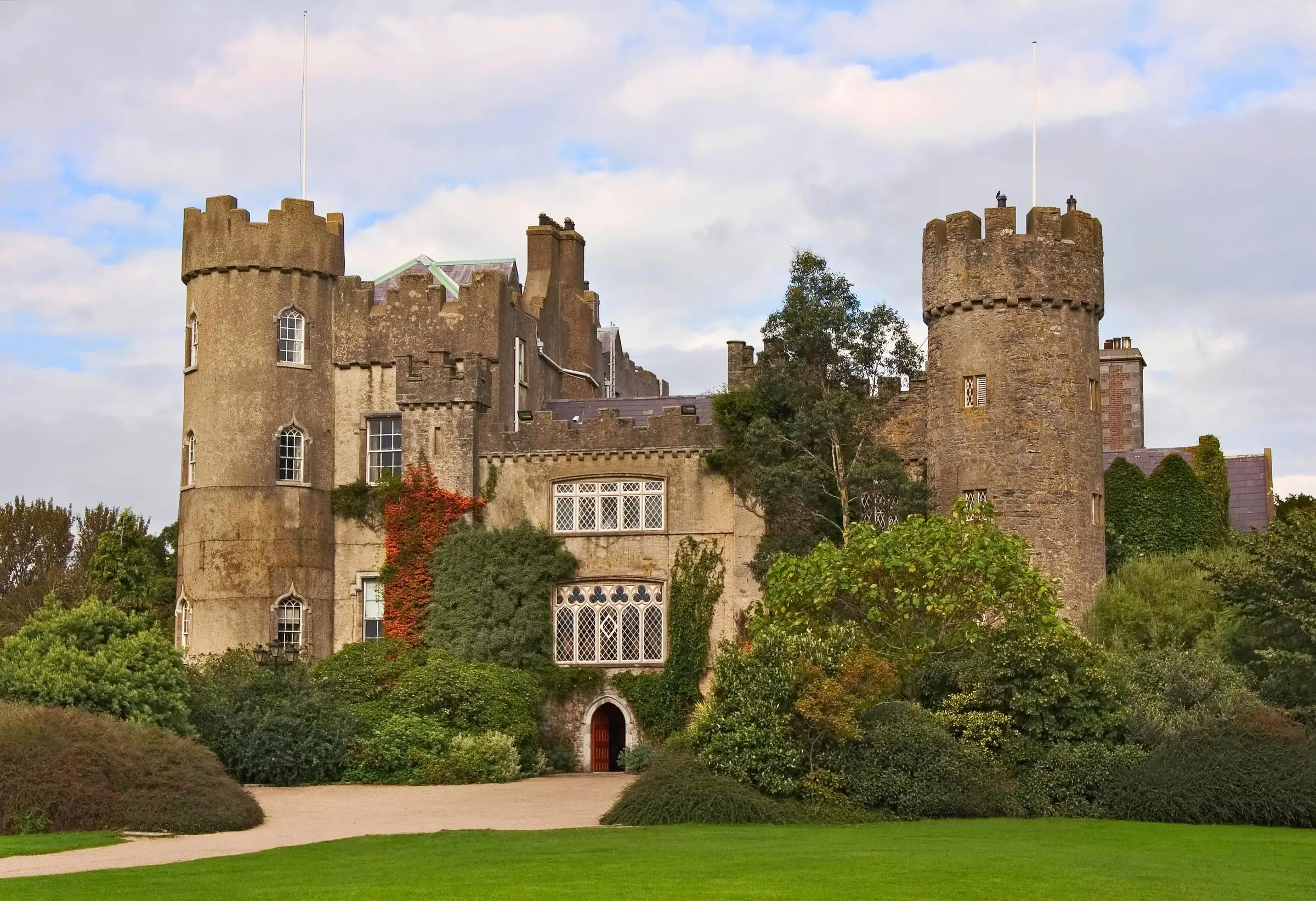
- For the Time-Poor: A full visit, including the tour and a coffee, takes about 90 minutes to two hours. Because it is located right on the northern commuter train line, it is incredibly easy to combine a morning at Skerries Mills with an afternoon exploring Malahide Castle or walking the cliffs in Howth.
While Skerries Mills rarely sees the massive crowds of city-center attractions, the guided tours have strict capacity limits due to the narrow, steep staircases inside the windmills. If you are visiting between June and August, secure your spot ahead of time.
The Historical Significance of Skerries Mills
Milling has taken place on this specific plot of land since the 12th century, originally established by an Augustinian priory. The monks recognized that the coastal winds and the local water sources created an ideal environment for grinding the region’s grain.
The structures you see today date primarily from the 16th to the 18th centuries. For hundreds of years, these mills were the industrial heart of the local community, processing oats, wheat, and barley into flour for bread and meal for livestock. By the early 20th century, modern industrial roller mills rendered traditional stone-grinding obsolete, and the Skerries mills fell into ruin.
In the 1990s, the local community and Fingal County Council launched a massive, decade-long restoration project. They didn’t just stabilize the ruins; they sourced traditional materials and rebuilt the internal machinery so the mills could actually function again. Today, it is one of the only places in Europe where you can see a watermill and two distinct types of windmills operating in the same location.
5 Architectural & Cultural Highlights
When you take the guided tour, the guide will walk you through the mechanics and history of the site. Here are the five specific highlights to look out for.
1. The Great Windmill (Five Sails)
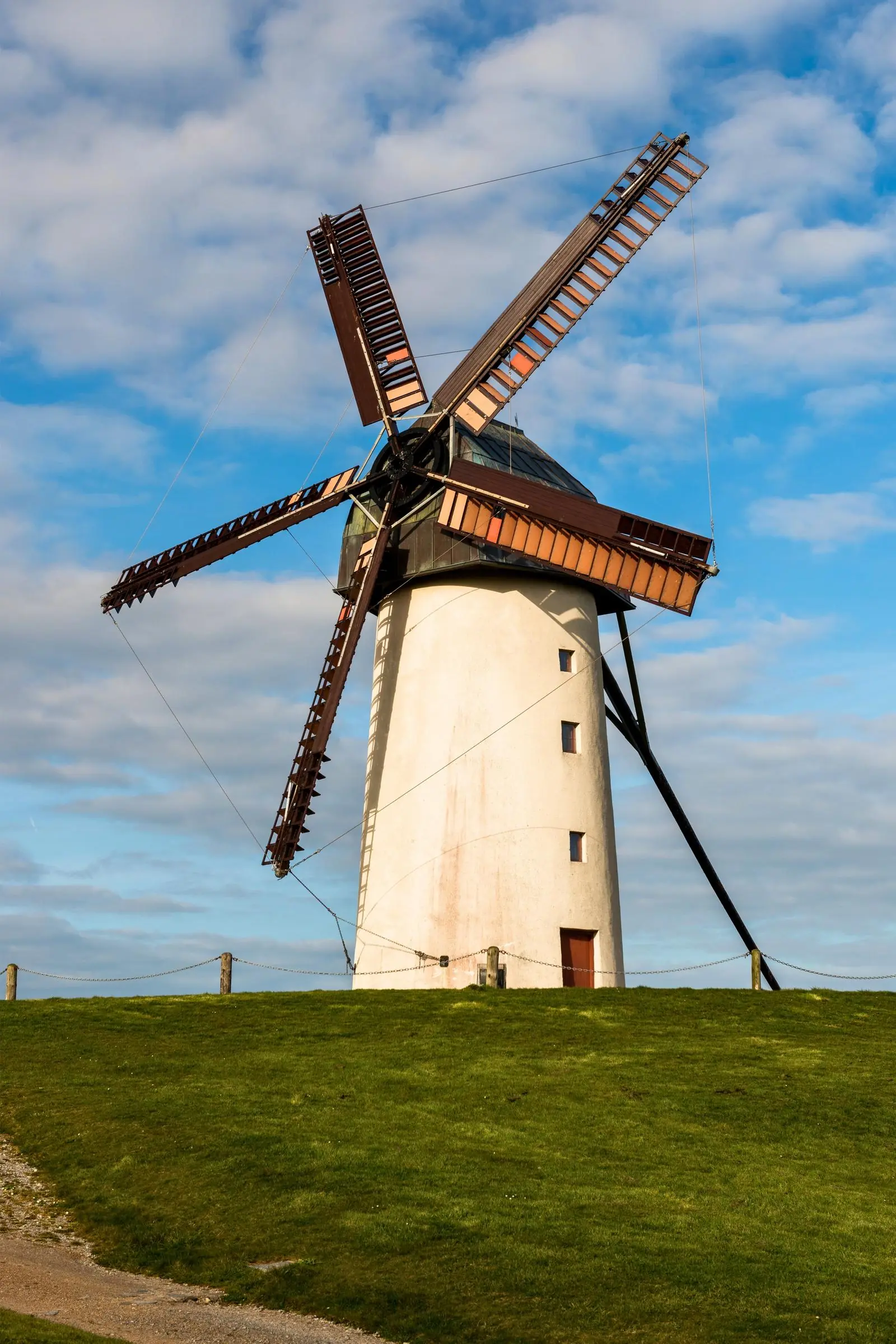
Dominating the skyline, the Great Windmill is a towering, five-sailed smock mill. Built in the late 18th century, it is incredibly rare; most windmills have four sails. The five-sail design was an engineering experiment to capture more wind power, allowing the mill to operate even in lighter coastal breezes. Inside, the sheer scale of the wooden “brake wheel” and the deafening rumble when the sails are engaged is a visceral experience.
2. The Small Windmill
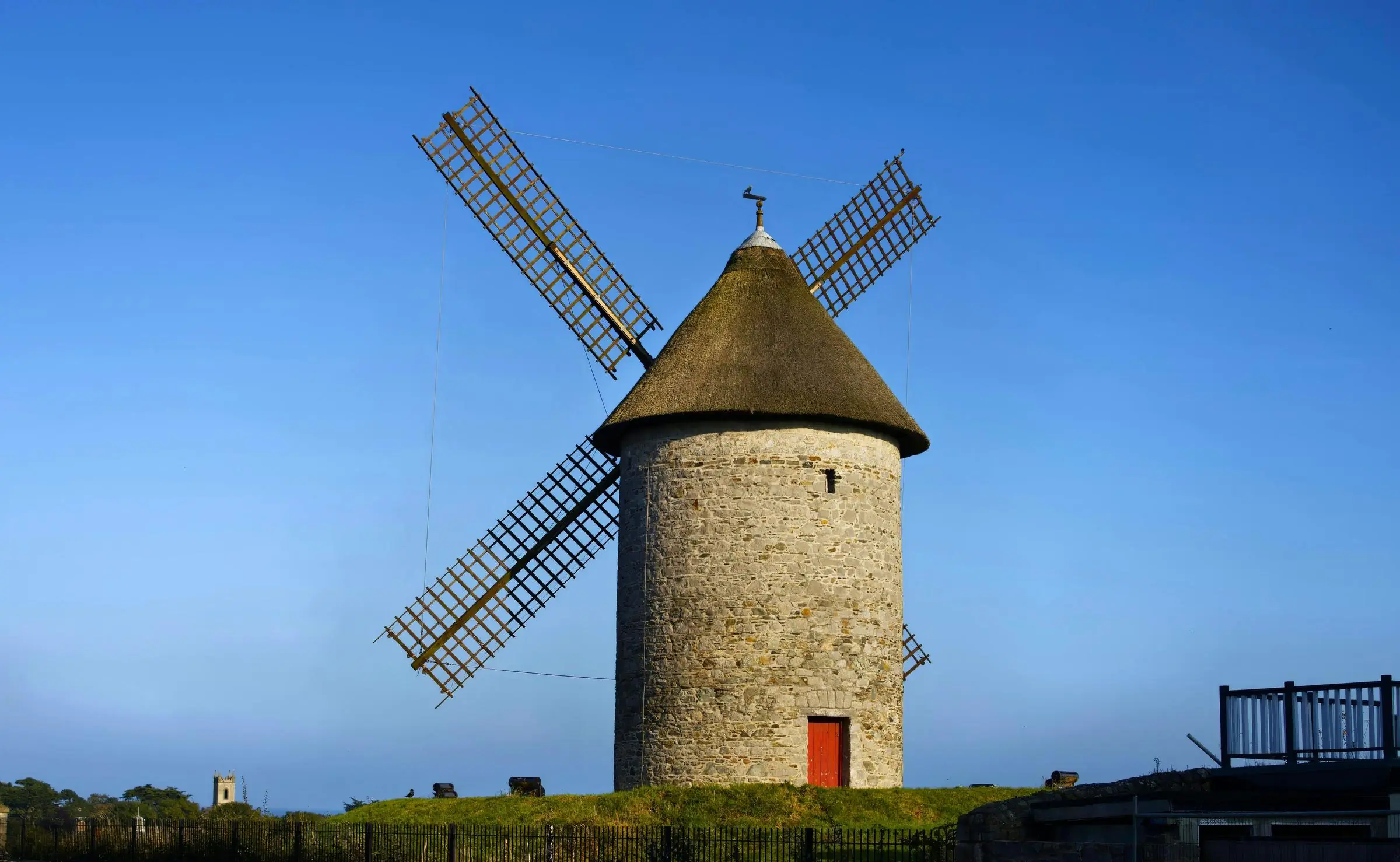
Older and more traditional than its giant neighbor, the Small Windmill is a classic thatched-roof tower mill dating back to the 16th century. It was primarily used for grinding oats. Notice the thatched roof—it is built on a track system so the entire roof (and the sails attached to it) can be rotated to face the wind, a process called “winding the mill.”
3. The Watermill & Mill Pond
While the windmills rely on the unpredictable Irish weather, the watermill provided a steady, reliable source of power. The undershot water wheel is fed by a large mill pond. Inside the watermill building, you can see the complex system of belts and pulleys that transfer the power from the turning wheel outside to the heavy grinding stones inside.
4. The Bakery & Stone-Ground Flour
Skerries Mills isn’t just a museum; it is a working production facility. The mills still grind grain into wholemeal flour, which is then used in the on-site bakery. The cultural highlight of the tour is learning about traditional Irish baking methods, specifically the making of Irish brown soda bread, which relies on the coarse, stone-ground flour produced right above your head.
5. The Mill Field & Crop Cultivation
Surrounding the mills are the Mill Fields, which are planted with traditional crops like oats, barley, and wheat. This provides vital context, allowing you to see the entire lifecycle of bread-making from the grain growing in the soil to the flour falling into the sacks. The fields also offer the best vantage points for photographing the mills against the sea.
Ticket Options: Guided vs. Independent
You have two choices when visiting Skerries Mills: walking the grounds independently or booking a guided tour.
How to Visit Skerries Mills
- Guided Tour (Recommended): Grants you access inside the windmills and watermill. You get to see the machinery working, climb the narrow stairs to the grinding floors, and hear the history from a local expert.
- Interactive: Guides often demonstrate how the grain is ground and explain the mechanics of the sails.
- Affordable: At roughly €12, it is excellent value for a 50-minute guided experience.
- Independent Visit (Free): You can walk the exterior paths, see the mill pond, and visit the cafe and craft shop without a ticket.
- Limitation: You cannot enter the mill buildings or see the machinery without a guide due to safety regulations.
If you make the journey out to Skerries, it is highly recommended to book the Skerries Mills Guided Tour. Seeing the exterior is nice, but the true value of the site is experiencing the engineering inside.
Logistics: How to Get to Skerries Mills
Skerries is located in North County Dublin and is exceptionally well-connected by public transport. You do not need a car to visit.
By Train (The Best Option)
The easiest and most scenic way to reach Skerries is by train.
- Head to Dublin Connolly, Tara Street, or Dublin Pearse stations in the city center.
- Board a northbound Commuter train heading towards Drogheda or Dundalk. (Note: The DART train only goes as far as Malahide; you need the Commuter service, though you can use your Leap Card to pay the fare).
- The journey takes approximately 35 to 45 minutes.
- Disembark at Skerries Station.
Walking from Skerries Station to the Mills
⏱️ Total: 10 minExit the Station
Walk out of Skerries train station and turn left onto Station Road.
Turn onto Shenick Road
Follow Station Road for a few minutes until you reach the roundabout. Take the right turn onto Shenick Road.
Arrive at the Mills
You will see the entrance to Skerries Mills and the large mill pond on your left. The total walk is flat and takes less than 10 minutes.
By Bus
Dublin Bus routes 33 and 33A service Skerries from the city center (Lower Abbey Street). However, the bus makes dozens of stops and can take up to 90 minutes. The train is highly recommended over the bus for this journey.
Local Tips for Avoiding Crowds
- Timing Your Visit: Skerries is a popular weekend destination for Dublin locals. To avoid the busiest tour groups, visit on a weekday morning (Tuesday through Thursday are ideal). If you must visit on a weekend, book the first tour of the day (usually around 10:30 AM).
- Accessibility Warning: The guided tour involves climbing steep, narrow, ladder-like wooden stairs inside the windmills. Wear flat, comfortable, closed-toe shoes. If you have mobility issues, you can still access the ground floors, the watermill, and the cafe, but you will not be able to climb to the upper grinding floors of the windmills.
- Combine with the Harbor: After your tour, don’t just get back on the train. Walk 15 minutes through the town to Skerries Harbour. It is one of the most picturesque working fishing harbors on the east coast. Grab a seafood chowder at Stoop Your Head or a pint at Joe May’s pub.
- The Cafe: The Watermill Cafe on-site is excellent and serves scones and brown bread made from the flour ground right next door. It gets very busy right after a tour finishes, so try to grab your coffee before your tour begins.
Where to Stay: Neighborhood Context
If you prefer a quieter, coastal vibe over the busy Dublin city center, staying in North County Dublin is a great option. Skerries itself has a few boutique guesthouses, but nearby Malahide offers a wider range of hotels and restaurants while keeping you on the same convenient train line.
Use the map below to explore accommodation options along the northern coastal train line (Skerries, Rush, Donabate, and Malahide).
Keep Planning: If you are basing yourself in the city and taking day trips, check out our guide on Where to Stay in Dublin for neighborhood breakdowns.
Frequently Asked Questions
How long does the guided tour of Skerries Mills take?
The guided tour lasts approximately 50 to 60 minutes. You should allocate at least 90 minutes for your total visit to allow time to explore the mill pond, the exterior fields, and the craft shop.
Are the windmills actually working?
Yes. Both windmills and the watermill are fully functional. However, the windmills only operate when the wind conditions are right. If there is no wind, or if the wind is too strong, the sails will be locked for safety. The watermill operates more consistently.
Is Skerries Mills included in the Dublin Pass?
Historically, Skerries Mills has been included in the Go City Dublin Pass, but pass inclusions change frequently. If you do not have a pass, it is best to book a direct entry ticket to guarantee your tour time.
Can I buy the flour milled at Skerries Mills?
Yes! The craft shop on the ground floor sells bags of the stone-ground wholemeal flour produced by the mills, making for a unique, practical souvenir.
Is the site wheelchair accessible?
The visitor center, cafe, craft shop, and the ground floor of the watermill are fully wheelchair accessible. However, due to the historic nature of the buildings, the upper floors of the windmills are only accessible via steep, narrow wooden stairs and are not suitable for wheelchairs or those with severe mobility restrictions.
Can I bring my dog?
Dogs are welcome on the exterior grounds and in the Mill Fields as long as they are kept on a leash (due to the resident wildlife in the pond). However, only certified assistance dogs are allowed inside the mill buildings and the cafe.
Ready to explore Dublin's coastal history?
Don’t miss the chance to step inside these rare, 16th-century working mills. Secure your guided tour tickets in advance, especially if you are visiting during the summer months.