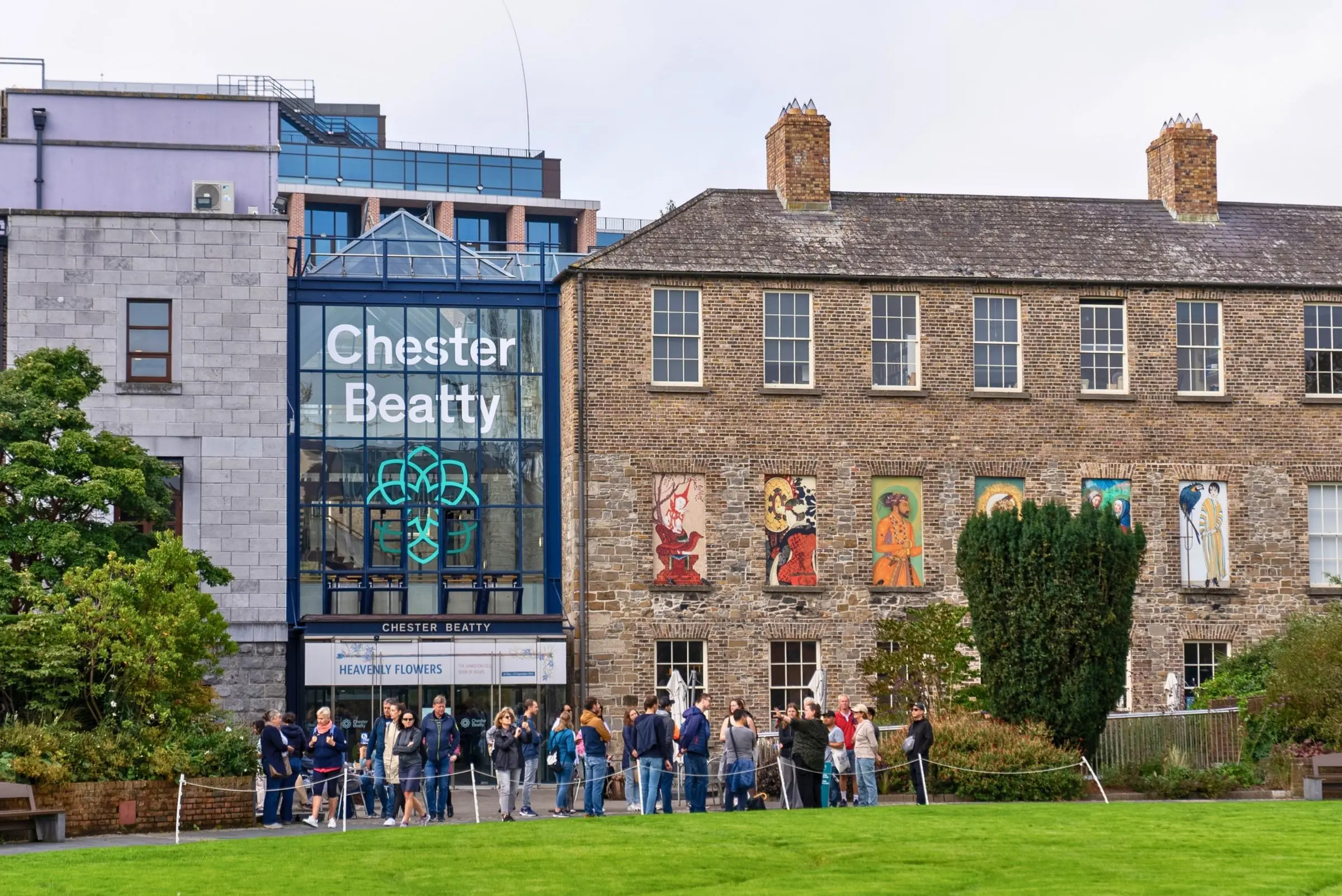
Tucked away in the Clock Tower building at the back of Dublin Castle, the Chester Beatty is one of the city’s most culturally significant institutions. While thousands of visitors queue daily across town to see a single manuscript at Trinity College, the Chester Beatty quietly houses thousands of the world’s rarest books, scrolls, and religious texts—and it costs absolutely nothing to enter.
Donated to the Irish state by an American-born mining magnate, this museum is a journey through human history, religion, and the art of the book. Whether you are interested in early Christian papyri, intricate Islamic calligraphy, or Japanese woodblock prints, this guide will help you navigate the collection, find the best times to visit, and figure out how it fits into your broader Dublin itinerary.
Is the Chester Beatty Right for You?
Because Dublin has so many museums, it helps to know if this specific collection aligns with your travel style.
- For the Budget Traveler: It is 100% free. You can spend hours here without spending a cent, making it one of the best value activities in the city.
- For the Time-Poor: The museum is compact. You can comfortably see the main highlights in 45 to 60 minutes, making it an easy addition before or after visiting the State Apartments with Dublin Castle tickets or joining an early access Book of Kells and Dublin Castle tour.
- For Families: Older children and teenagers with an interest in history or art will find it fascinating. However, the exhibits are heavily text-and-artifact based, with low lighting to protect the manuscripts. It is not particularly interactive for toddlers or very young children.
- For History Buffs: This is non-negotiable. The collection includes some of the earliest known surviving copies of the Gospels and the Qur’an.
The History: Who Was Chester Beatty?
Sir Alfred Chester Beatty (1875–1968) was an American-born mining engineer who made his fortune in the early 20th century. Known as the “King of Copper,” his wealth allowed him to pursue his true passion: collecting rare books, manuscripts, and antiquities from across the globe.
Unlike many collectors of his era who focused solely on Western art, Beatty had a deep appreciation for Islamic and East Asian cultures. He relocated to Ireland in 1950, bringing his massive collection with him. Upon his death, he bequeathed the entire library to the Irish people. Today, it stands as a testament to global cross-cultural exchange, housed in a modern, purpose-built facility within the historic walls of Dublin Castle.
5 Cultural & Architectural Highlights
The museum is divided into two main permanent exhibitions: Arts of the Book on the first floor and Sacred Traditions on the second floor. Here is a deep-dive into what you should look out for.
1. The Islamic Collection
Beatty’s collection of Islamic manuscripts is considered one of the finest in the world. As you walk through the dimly lit galleries, look for the intricately illuminated Qur’ans dating back to the 9th century. The collection features masterpieces of calligraphy from Turkey, Iran, and India. Pay special attention to the Mughal miniature paintings, which offer incredibly detailed, vibrant depictions of royal court life and epic poetry.
2. The East Asian Collection
The East Asian section is a masterclass in delicate craftsmanship. Highlights include Japanese emaki (picture scrolls) that tell centuries-old folk tales, and Chinese jade books—where imperial texts are literally carved into thin, translucent slabs of jade and bound together. You will also find an impressive array of Japanese woodblock prints and intricately carved rhinoceros horn cups.
3. The Western Collection & Biblical Papyri
For scholars of early Christianity, the Chester Beatty is ground zero. The museum holds the Chester Beatty Papyri, a group of early papyrus manuscripts containing some of the oldest surviving texts of the New Testament, dating back to the 2nd and 3rd centuries. Seeing these fragile, fragmented pages in person provides a tangible connection to the ancient world.
4. The Roof Garden
Once you have finished viewing the manuscripts, take the elevator to the top floor. The Chester Beatty features a small, modern roof garden. It is a quiet, minimalist space offering a unique vantage point over the Dubh Linn Gardens and the medieval Record Tower of Dublin Castle. It is a great spot to catch your breath away from the busy city streets.
5. The Silk Road Café
Located on the ground floor, the Silk Road Café is an attraction in its own right. Reflecting the global nature of the museum’s collection, the café serves Middle Eastern and Mediterranean food. It is widely considered one of the best museum cafes in Dublin. Grab a slice of baklava, a falafel plate, and a mint tea before heading back out into the city.
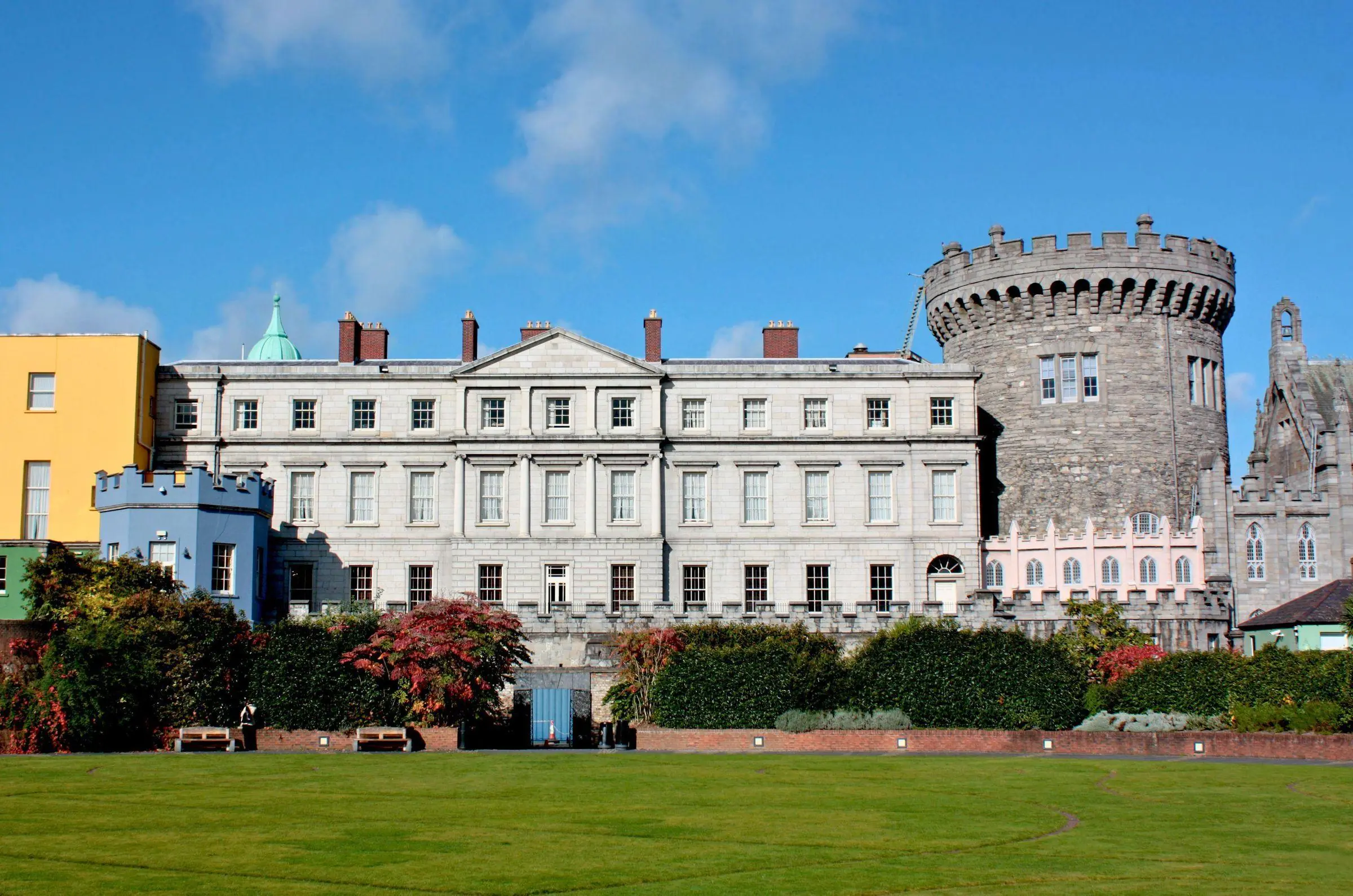
Dublin Castle
Everything you need to know to navigate 800 years of Irish history at Dublin Castle.

Book of Kells & Trinity College
Navigate Dublin's oldest university and its most famous medieval manuscript without getting stuck in the crowds.
Ticket Options: Independent vs. Guided
Entry to the Chester Beatty is completely free, and you do not need to book a ticket in advance to view the permanent collections. However, because the museum sits inside the Dublin Castle complex, many visitors choose to combine their visit with a guided tour of the surrounding historic sites.
Dublin Castle & Book of Kells Tour
- Includes skip-the-line entry to the Book of Kells
- Fully guided exterior tour of Dublin Castle grounds
- Perfect context before exploring Chester Beatty independently
- 2.5-hour comprehensive walking tour
Chester Beatty Only
- 100% free entry to the museum
- No advance booking required
- Self-paced exploration of the galleries
- Does not include Dublin Castle State Apartments
Our Verdict: How to Visit
- Visiting the Chester Beatty independently is easy and free.
- Booking a guided walking tour that covers Dublin Castle and Trinity College gives you the historical context of the area.
- You can easily slip into the Chester Beatty for an hour after your walking tour concludes.
- The museum itself does not offer daily public guided tours of the collection.
- If you only want to see the manuscripts, paying for a broader city tour isn’t necessary.
Keep Planning: If you are interested in Ireland’s other famous manuscripts, read our complete guide to the Book of Kells and Trinity College.
Logistics: Getting There & Getting Around
The Chester Beatty is located in the heart of the city, but finding the entrance can confuse first-time visitors because it is tucked behind the main castle buildings.
Exact Location: The Clock Tower Building, Dublin Castle, Dublin 2.
Transit Directions
- By Luas (Tram): Take the Green Line to the St. Stephen’s Green stop or the Dawson stop. From either, it is a 10-minute walk to the castle. Alternatively, take the Red Line to Jervis, cross the River Liffey at the Millennium Bridge, and walk up through Temple Bar (about 12 minutes).
- By Bus: Numerous city buses stop on Dame Street (Routes 13, 27, 40, 49, 54a, 77a). Get off at the Dublin Castle/City Hall stop.
- Hop-on Hop-off: If you are using the City Sightseeing Bus, get off at the Dame Street/Dublin Castle stop.
Walking Route: Finding the Entrance
⏱️ Total: 10 minEnter via Palace Street
From Dame Street, turn onto Palace Street (right next to the Olympia Theatre) and walk through the ornate gates into the Lower Courtyard of Dublin Castle.
Pass the Record Tower
Walk straight down the slight slope of the Lower Courtyard, passing the historic Chapel Royal and the medieval stone Record Tower on your right.
Reach the Dubh Linn Gardens
Just past the Chapel Royal, turn right toward the circular lawn of the Dubh Linn Gardens. The modern glass entrance to the Chester Beatty sits right between the historic Clock Tower building and the garden lawn.
Local Tips for Avoiding Crowds
While it rarely sees the chaotic crowds of the Guinness Storehouse or Trinity College, the Chester Beatty can get congested due to its narrow corridors and low lighting.
- Timing is Everything: The museum is quietest right when it opens at 9:45 AM on Tuesdays, Thursdays, and Fridays (note that it opens later on Wednesdays and Sundays). Saturday afternoons and rainy Sundays are the busiest times, as locals use it as a free indoor refuge.
- Bag Policy: Large backpacks and umbrellas are not permitted in the galleries to protect the glass cases. There are free, secure lockers on the ground floor. Bring a €1 coin to operate the locker (the coin is returned when you retrieve your bag).
- Lighting: The galleries are kept very dark to prevent the ancient inks and pigments from fading. Give your eyes a minute to adjust when you walk in.
- Audio Guide: Download the free Chester Beatty app on your smartphone before you arrive. It provides an excellent audio tour of the highlights. Just remember to bring your own headphones.
Monday Closures & Wednesday Hours: From November through February, the Chester Beatty is closed on Mondays (and typically remains closed on Mondays year-round except for public bank holidays). Also note that on Wednesdays, the museum remains open late until 8:00 PM. Always check your day of the week before walking over.
Where to Stay Nearby
Staying near Dublin Castle puts you right in the medieval heart of the city, within walking distance of Temple Bar, Christ Church Cathedral, and St. Stephen’s Green. Use the map below to find accommodations near the museum.
Frequently Asked Questions
How much does it cost to enter the Chester Beatty?
Admission to the Chester Beatty is completely free for all visitors. There is a donation box in the lobby if you wish to support the museum, but there is no obligation to pay.
How long does it take to walk through the Chester Beatty?
Most visitors spend between 45 minutes and 1.5 hours exploring the two main exhibition floors. If you stop for food at the Silk Road Cafe or spend time in the roof garden, allow for 2 hours.
Is the Chester Beatty wheelchair accessible?
Yes, the museum is fully wheelchair accessible. There are elevators to all floors, including the roof garden, and accessible restrooms are located on the ground floor.
Can I take photographs inside the galleries?
Photography without flash is generally permitted in most areas of the museum. However, certain temporary exhibitions or specific fragile manuscripts may have “no photography” signs. Always check the signage on individual display cases.
Is there a dress code for visiting the museum?
No, there is no dress code. Despite housing religious texts, it is a secular museum environment. Comfortable walking shoes are recommended as you will be on your feet.
Does the museum have a cloakroom for luggage?
The museum provides free lockers for standard backpacks and coats (requires a €1 coin deposit). However, they cannot accommodate large suitcases. If you have heavy luggage, you should use a luggage storage service in the city center before arriving.
Explore More of Dublin's History
If you are planning to visit multiple paid attractions around Dublin Castle, such as Christ Church Cathedral or the Guinness Storehouse, a city pass can save you significant money. Check out our breakdown of the best sightseeing passes.