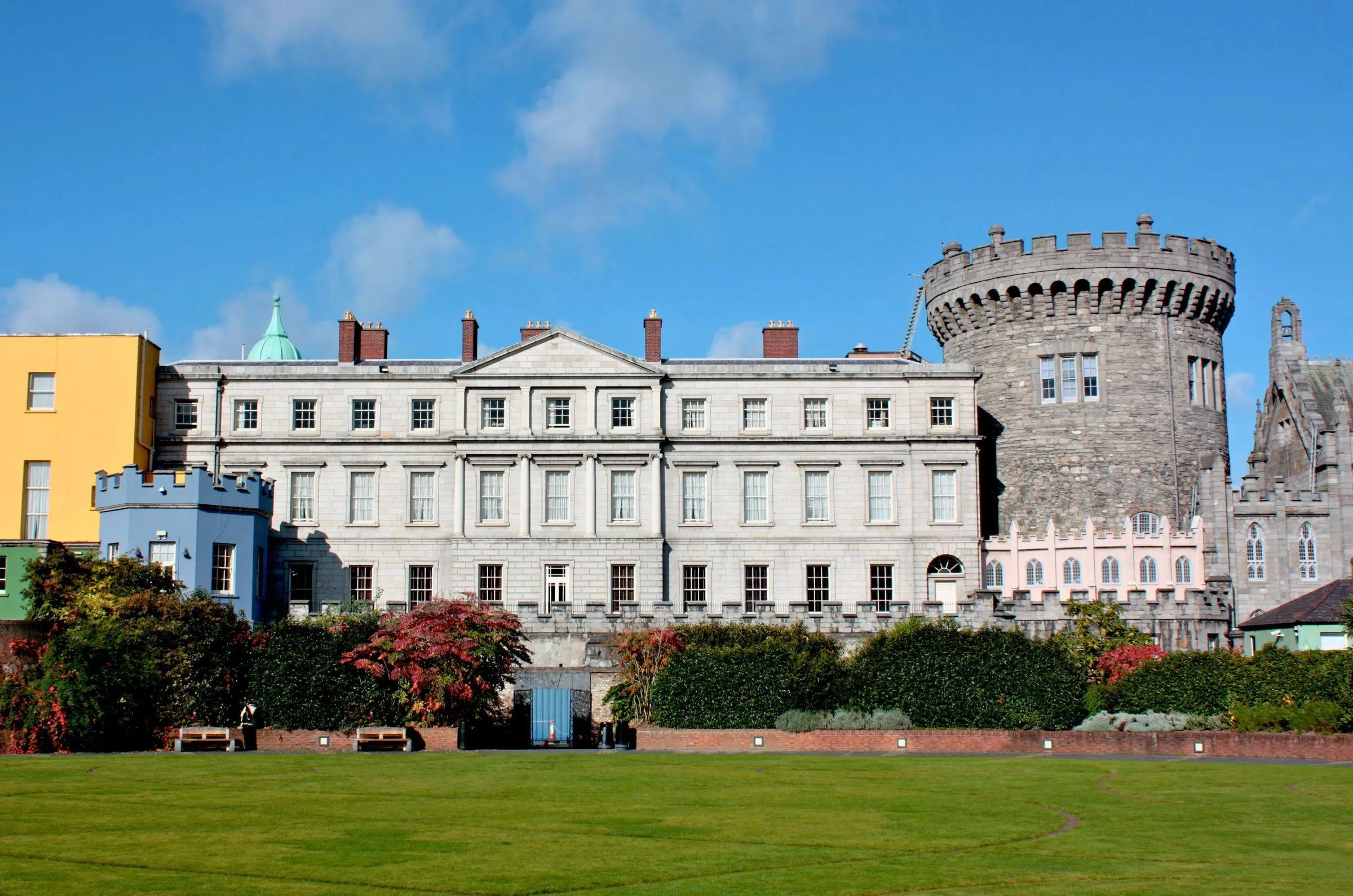
If you arrive at Dublin Castle expecting a medieval fortress with a moat and drawbridge, you might be confused. From the main courtyard, the complex looks more like a grand Georgian palace than a medieval stronghold.
For over 700 years, Dublin Castle was the seat of British rule in Ireland. It was handed over to Michael Collins and the Irish Provisional Government in 1922, marking a massive turning point in Irish history. Today, it is a working government complex, a major tourist attraction, and the site of Ireland’s presidential inaugurations.
Because the castle is a patchwork of different eras—ranging from 13th-century stone towers to 18th-century state rooms and modern conference facilities—visiting requires a bit of planning. This guide breaks down exactly what to see, how to choose the right entry pass, and how to navigate the grounds efficiently.
How to Visit Based on Your Travel Style
Dublin Castle is not a one-size-fits-all attraction. Depending on your budget and schedule, you can tailor your visit.
- For the Time-Poor: If you only have 45 minutes, buy a standard self-guided ticket to the State Apartments. You can walk through the grand rooms at your own pace, read the placards, and be back out on Dame Street in under an hour.
- For History Buffs: You need to book an official guided tour or a comprehensive guided walking tour. This is the only way to access the Viking Excavation (the Undercroft) and the Chapel Royal.
- For Budget Travelers: You do not need a ticket to walk into the main upper courtyard, view the exterior of the Record Tower, or relax in the Dubh Linn Gardens. You can also visit the excellent Chester Beatty library on the castle grounds completely free of charge.
During the peak summer months (June through August), walk-up tickets for the official guided tours frequently sell out by midday. If you want to see the Viking Undercroft, book your guided tour in advance.
5 Architectural & Cultural Highlights
Dublin Castle is vast, but these five specific areas form the core of the visitor experience.
1. The State Apartments
The State Apartments are the main draw for most visitors. Built as the residential and public quarters for the Viceregal court, these rooms are heavily decorated with crystal chandeliers, intricate plasterwork, and historic portraits.
Key rooms include:
- St. Patrick’s Hall: One of the most important ceremonial rooms in Ireland. It features a spectacular painted ceiling and is used today for the inauguration of the President of Ireland.
- The Throne Room: Built for the visit of King George IV in 1821, this room contains a throne believed to have been made for his arrival.
- The State Drawing Room: Heavily damaged by a fire in 1941, this room was meticulously restored and is now used for receiving foreign dignitaries.
2. The Viking Excavation (The Undercroft)
Hidden beneath the modern brickwork of the castle are the original 13th-century foundations and the remnants of Viking Dublin. During excavations in the 1980s, archaeologists uncovered the base of the original Powder Tower and parts of the medieval city wall. You can literally see where the River Poddle (now entirely underground) used to flow against the castle walls. Note: Access to the Undercroft is strictly limited to visitors on a guided tour.
3. The Chapel Royal
Designed by Francis Johnston and opened in 1814, the Chapel Royal is a masterpiece of Gothic Revival architecture. The exterior is decorated with over 90 carved stone heads representing historical figures and Irish saints. Inside, the chapel features elaborate plasterwork vaults and carved oak galleries. Like the Undercroft, you generally need to be on a guided tour to go inside.
4. The Record Tower
Standing in the lower courtyard, the Record Tower is the last intact medieval tower of the original castle, dating back to 1204. Its walls are up to 4.8 meters (15 feet) thick. While you cannot currently go inside the tower, it provides the best visual evidence of what the original Norman fortress looked like before the Georgian rebuild.
5. Dubh Linn Gardens
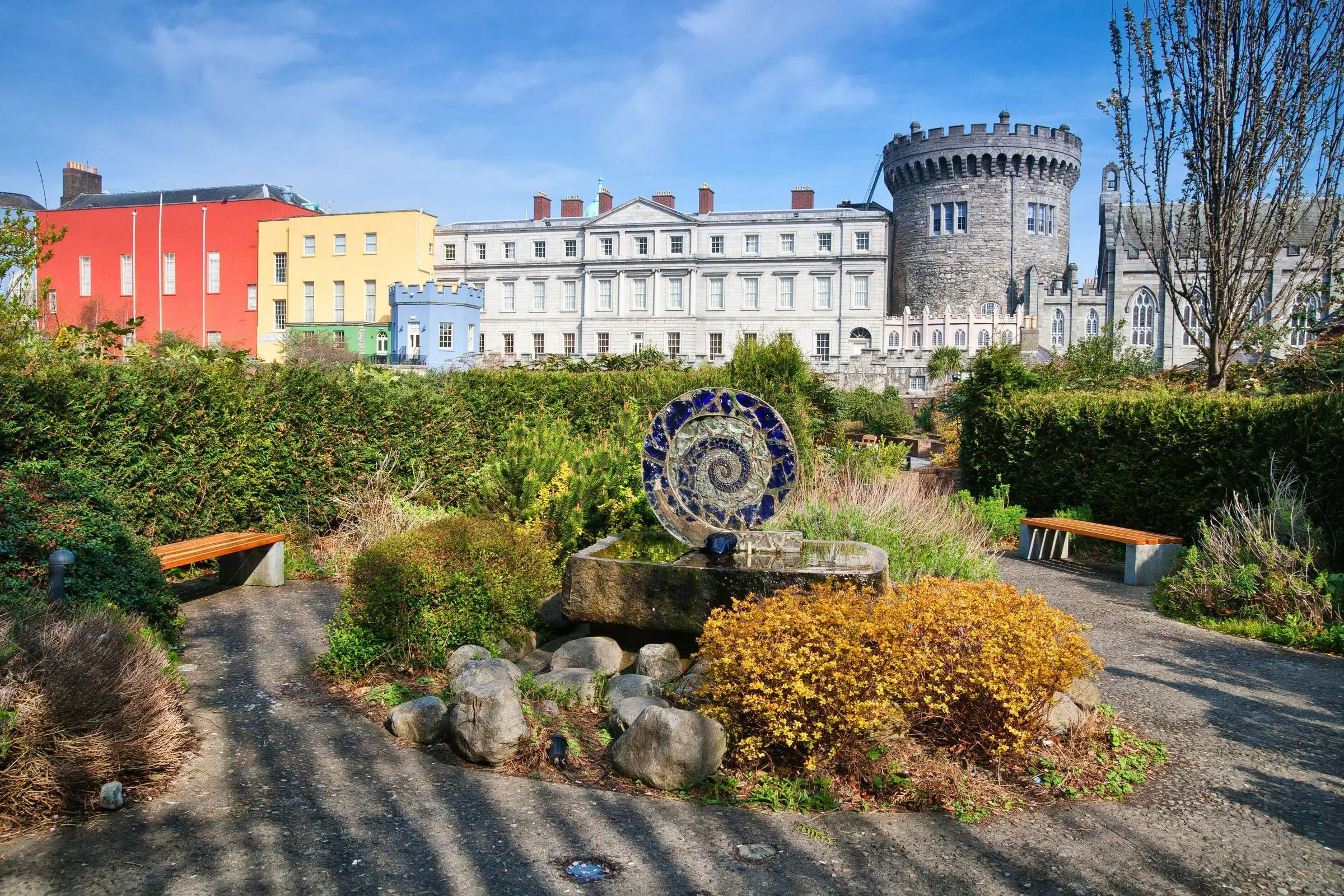
Located just behind the castle, these manicured gardens sit on the exact site of the original “black pool” (in Irish, Dubh Linn), where the Vikings first moored their ships and from which the city of Dublin gets its name. Today, the gardens feature a large Celtic knot design cut into the lawn and serve as a quiet escape from the busy city center.
Keep Planning: The Dubh Linn Gardens share a courtyard with one of the city’s best free museums. Read our guide to the Chester Beatty to see why you should add it to your itinerary.
Ticket Options: Independent vs. Guided
When planning your visit, you have to decide whether you want to explore independently or take a guided tour.
If you just want to see the State Apartments, a self-guided ticket purchased directly at the castle (or on their official website) is sufficient. However, if you want context, access to the Viking ruins, and a broader understanding of Dublin’s history, a third-party combo tour is highly efficient.
Early Access: Book of Kells & Dublin Castle
- Includes fast-track entry to the Book of Kells
- Fully guided exterior and interior tour of Dublin Castle
- Access to the Castle Gardens
- 2.5-hour duration with a local guide
Castle, Cathedrals & Book of Kells
- Guided tour of Dublin Castle grounds
- Entry to the Book of Kells
- Exterior tours of Christ Church & St Patrick’s
- Good for travelers who want to see the main sights in one morning
Official Tickets: If you only want to visit Dublin Castle and nothing else, you can buy official tickets at the visitor center. Self-guided tickets are typically €8, while official guided tours are €12. Be aware that official guided tours have limited capacity and often sell out to walk-ups.
Logistics: Getting There and Getting Around
Dublin Castle is located right in the middle of the city, making it very easy to reach on foot if you are staying in the center.
- Address: Dame Street, Dublin 2.
- Main Entrance: The primary pedestrian entrance is via Cork Hill, just off Dame Street (next to City Hall). You will walk through the main gates into the upper courtyard.
- Alternative Entrance: You can also enter from the back via the pedestrian gate on Ship Street Little, which brings you past the Record Tower and into the Dubh Linn Gardens.
- By Luas (Tram): Take the Green Line to the Trinity or Dawson stops, or the Red Line to the Jervis stop. All are about a 10-minute walk away.
- By Bus: Numerous Dublin Bus routes stop on Dame Street right outside the castle, including the 13, 27, 40, 49, 54a, 56a, 77a, 123, 150, and 151.
A Standard 2-Hour Visit
⏱️ Total: 2 hArrive at the Upper Courtyard
Enter via Cork Hill. Take a few minutes to view the Bedford Tower and the Georgian architecture of the main square before heading to the State Apartments entrance.
Tour the State Apartments
Walk through the grand rooms, paying special attention to St. Patrick’s Hall and the Throne Room. Allow about 45 minutes for a self-guided pace.
The Undercroft & Chapel Royal
If you are on a guided tour, your guide will take you down to the Viking foundations and into the Chapel Royal.
Record Tower & Dubh Linn Gardens
Exit the main building and walk down to the lower courtyard. View the Record Tower and spend your remaining time relaxing in the Dubh Linn Gardens.
Local Tips
- Avoid the Midday Rush: The castle gets very busy between 11:00 AM and 2:00 PM, largely due to cruise ship excursions and large coach tours. Arrive right when it opens at 9:45 AM, or go after 3:00 PM for a quieter experience.
- State Closures: Because Dublin Castle is a working government building, the State Apartments are occasionally closed for state functions, EU meetings, or presidential events on short notice. Always check the official Heritage Ireland website for closure notices before you travel.
- Security: You will have to pass through a basic security screening to enter the State Apartments. Large backpacks and suitcases are not permitted, and there are no large lockers on site. Use a luggage storage service in the city center if you are carrying bags.
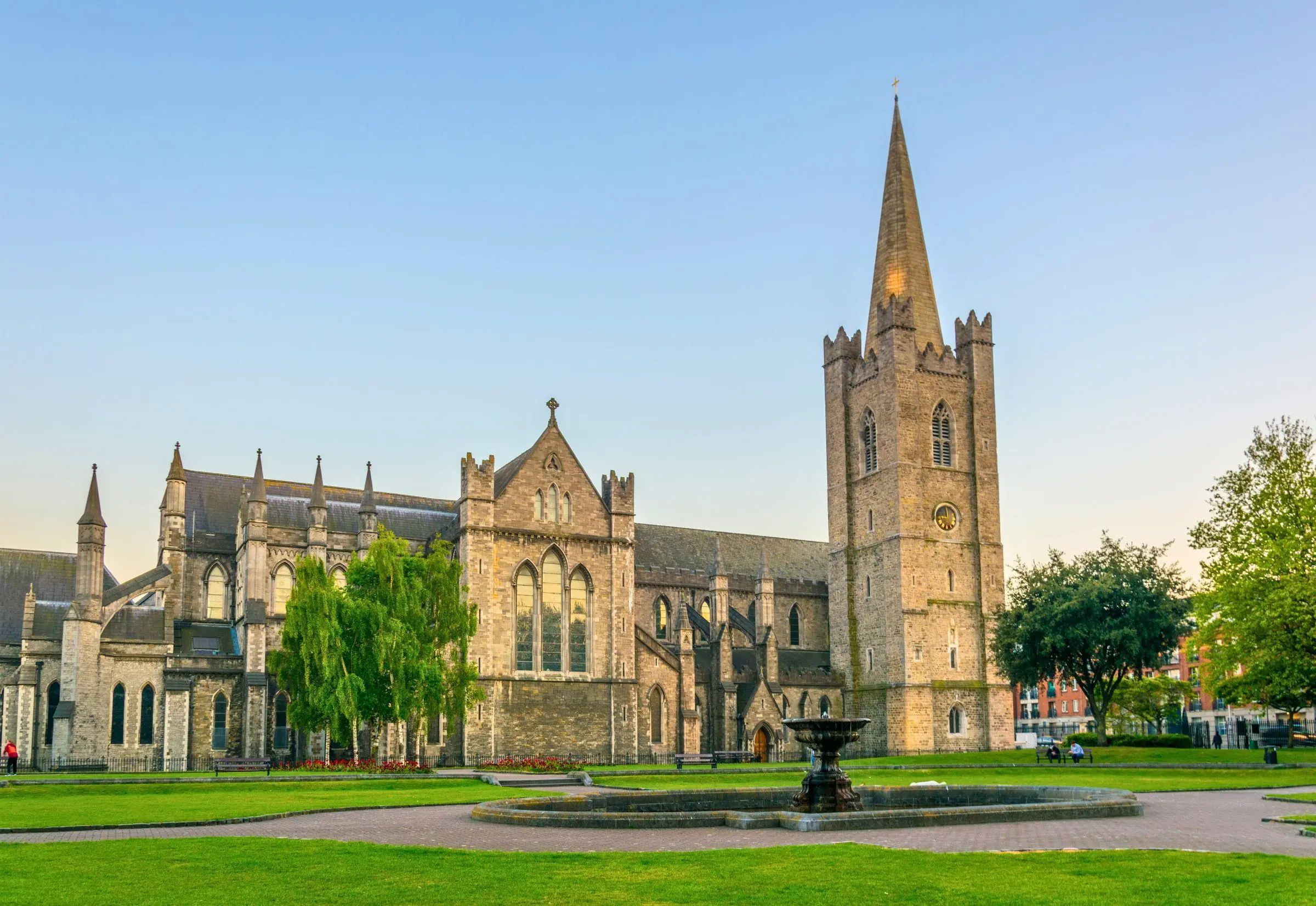
- Combine with Cathedrals: The castle is geographically perfectly positioned between Trinity College and the medieval cathedrals. It makes sense to visit the castle, then walk 5 minutes up the hill to Christ Church Cathedral.
Where to Stay Nearby
Dublin Castle is located on the edge of the Temple Bar neighborhood and the South City Center. Staying nearby puts you within walking distance of almost every major historical site.
If you want to be close to the castle but avoid the late-night noise of Temple Bar, look for hotels along South Great George’s Street, Dame Street (towards Trinity College), or around St. Stephen’s Green.
Frequently Asked Questions
Is Dublin Castle free to enter?
You can walk into the main courtyards and the Dubh Linn Gardens for free. However, you must purchase a ticket to enter the State Apartments, the Viking Undercroft, or the Chapel Royal.
How long does it take to visit Dublin Castle?
A self-guided tour of the State Apartments takes about 45 to 60 minutes. If you take the official guided tour (which includes the Undercroft and Chapel), expect it to take about 70 minutes. Allow an extra 30 minutes to wander the gardens.
Can I see the Viking ruins without a guided tour?
No. Due to the location and nature of the archaeological site beneath the castle, the Viking Undercroft is only accessible if you are on an official guided tour.
Is Dublin Castle wheelchair accessible?
The State Apartments and the Dubh Linn Gardens are fully wheelchair accessible, with elevators available. However, the Viking Undercroft involves steep stairs and uneven ground, making it inaccessible for wheelchair users.
Are there bag restrictions at Dublin Castle?
Yes. Large backpacks, suitcases, and bulky items are not allowed inside the State Apartments for security and conservation reasons. There are no large storage lockers on site, so leave heavy luggage at your hotel or a city storage facility.
Is the Dublin Castle tour included in city passes?
Yes, standard entry to the State Apartments is usually included in the Go City Dublin Pass. However, this only covers self-guided entry, not the guided tour required to see the Viking ruins.
Keep Planning: After exploring the castle, you are perfectly positioned to dive into Dublin’s medieval history. Check out our guide to Christ Church Cathedral or learn about the city’s Viking origins at Dublinia.